✦ Now welcoming new patients  ·  Toothache? Call early for the first available time  ·  HICAPS, Afterpay, SuperCare & most health fundsPoint Cook · (03) 8338 1515
Point Cook · Dental lasers explained

Dental laser technology in Point Cook.

A dental laser is a tool that uses a focused beam of light, at a set wavelength, to treat teeth or gums. Different wavelengths suit different jobs, from gum therapy to fillings and whitening. This page explains how dental lasers work in plain terms; your dentist at Magical Smiles Point Cook will explain how a laser would be used in your own treatment.

Heard of it before?

"Laser" comes up in more than one treatment.

Many people first hear about dental lasers during a conversation about something else, such as their gums or a sensitive tooth. Some of these may sound familiar.

Our dental technology guide covers other equipment too. If you're here about a gum lift, that page has the details.
  • A laser was suggested for your gums or a sensitive tooth. Sensitivity has its own page: laser tooth desensitisation.
  • You're reading about laser whitening or a gum lift and wonder what the laser does.
  • You've seen a laser unit and wondered what it was for.
  • A treatment "uses a laser" and you're not sure what that means.
  • You want to understand the technology before choosing a treatment.
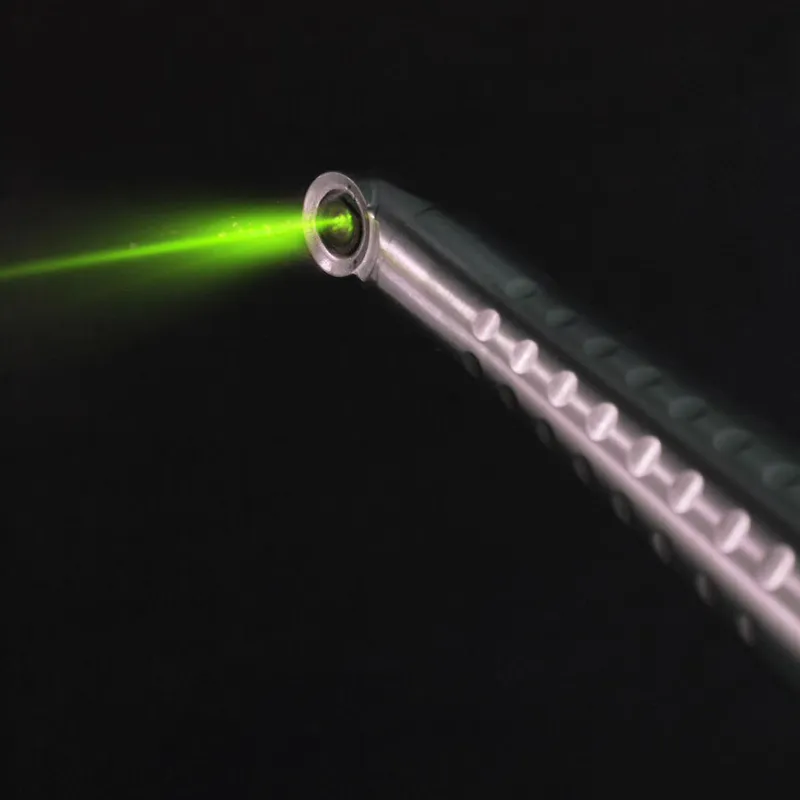
A dental laser handpiece with its green guide light
One kind of tool, many uses
How they work

What makes one dental laser different from another.

The key difference between dental lasers is wavelength, the type of light they produce. Each wavelength is absorbed by different things in the mouth, such as water, pigment or tooth mineral, which decides what the laser is good at.

Erbium lasers, such as Er:YAG, are absorbed by water and suit precise work on teeth and gums, like treating a small cavity or reshaping a gumline. Near-infrared lasers, such as Nd:YAG and diode lasers, reach deeper into soft tissue and help reduce bacteria, for example in gum disease therapy. Dual-wavelength systems combine two types in one unit.

Gum disease therapy is one place lasers are used, and gum disease is common: in the national adult oral health study of 2017–18, 30.1% of Australian adults had moderate or severe periodontitis (AIHW, page updated 6 August 2026). Lasers appear in public health advice too. Victoria's Better Health Channel notes that tongue-tie release often means snipping the frenum with surgical scissors or a laser.

Interested in imaging instead? See digital scanning and 3D imaging. Comparing whitening options? Read laser whitening versus lamp whitening.
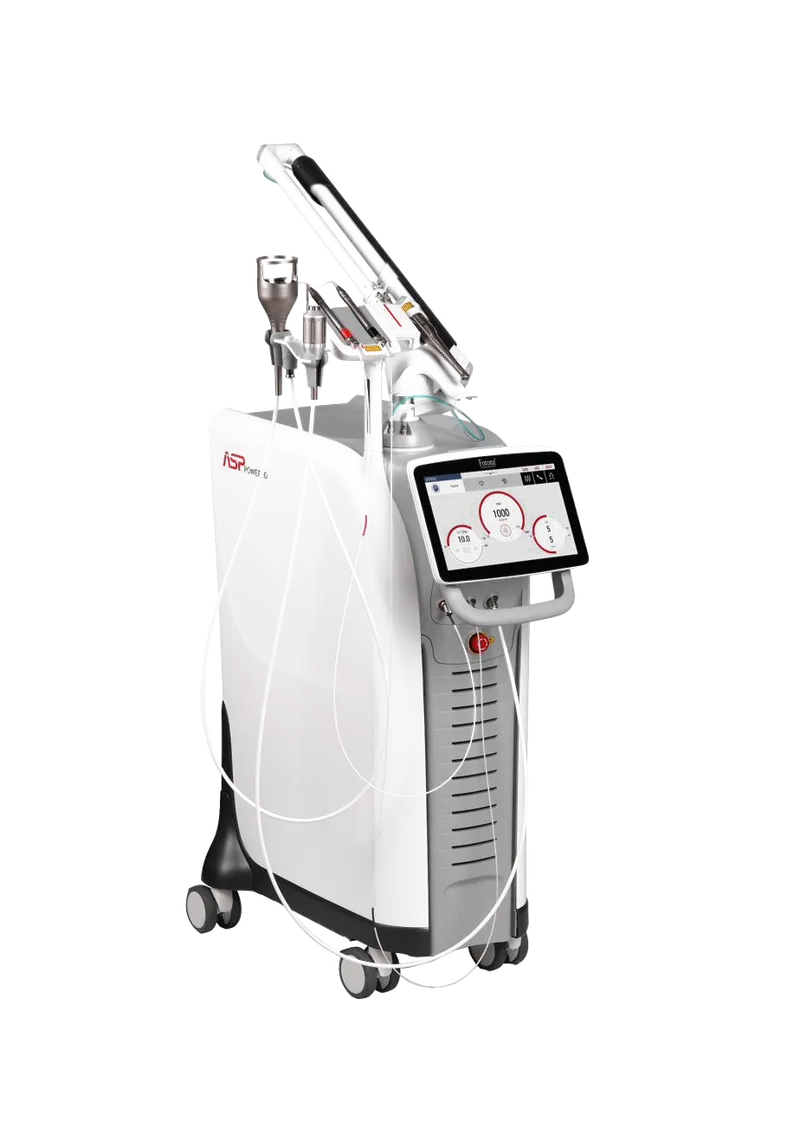
A dental laser unit
A dental laser unit
Why use a laser?

What a laser can add to an appointment.

Dental lasers in general
  • Fine control. The beam can be adjusted precisely, which suits small, careful work.
  • Less noise and vibration. Many laser procedures are quieter than a drill, which some people find easier.
  • Adjustable settings. The dentist sets the power and pulse to suit each treatment.

Some laser treatments are minor surgery and some are not. Any surgical or invasive procedure carries risks; each treatment page explains what applies, and suitability is always checked first.
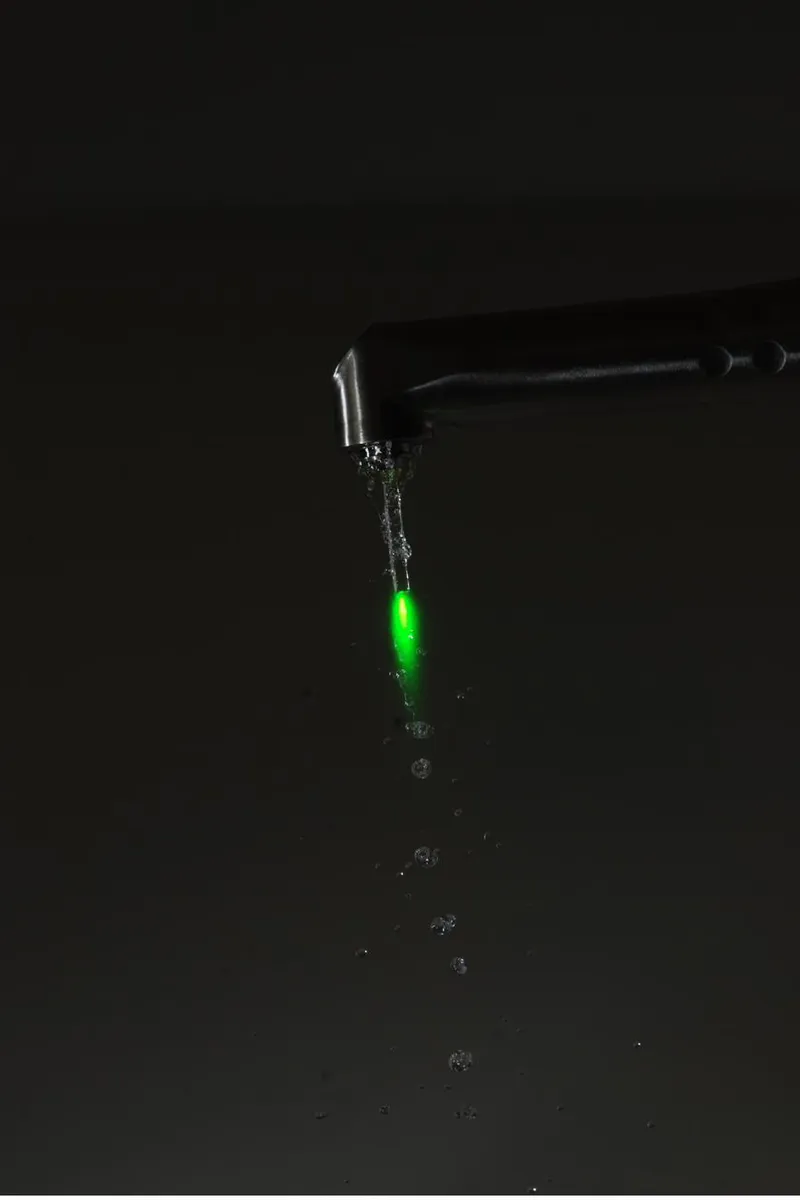
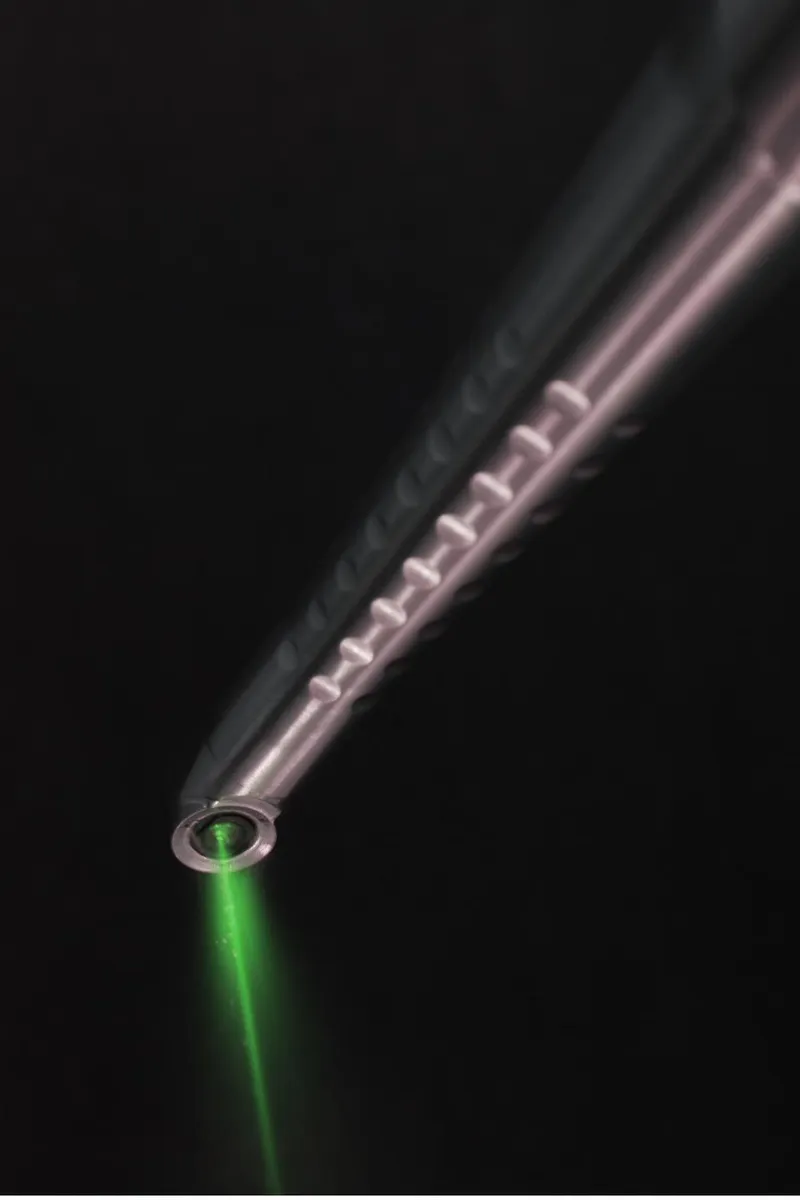
A dental laser handpiece with its guide light switched on
Good to know

Is this the right page for you?

This page is about the technology, not a particular treatment. Here's when it helps, and when a treatment page will serve you better.

Read on if...

  • You've been told a treatment uses a laser and want to understand it.
  • You like to know how something works before booking.
  • You're comparing a laser option with a traditional one.
  • You're curious about dental lasers in general.

Go to a treatment page if...

  • You already know the treatment you want; its page covers the process and healing.
  • You want details about one particular treatment.
  • You'd rather book and ask us in person.
What to expect

A typical laser appointment.

Details depend on the treatment, but most laser appointments follow a similar pattern.

01

Assessment first

Your dentist checks whether a laser suits your problem. It isn't the right tool for everyone.

02

Setting up

The laser is set for the job, and everyone in the room puts on safety glasses.

03

Treatment

Numbing is used if needed. The laser step is often a short part of the visit.

04

Follow-up

Some treatments need a review visit, and we'll tell you what to expect.
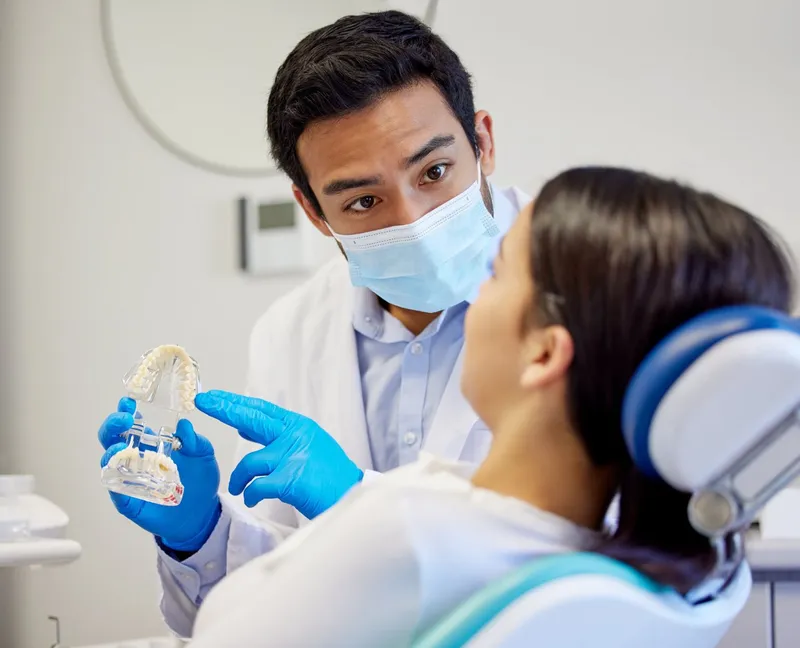
A dentist explaining a treatment to a patient before it begins
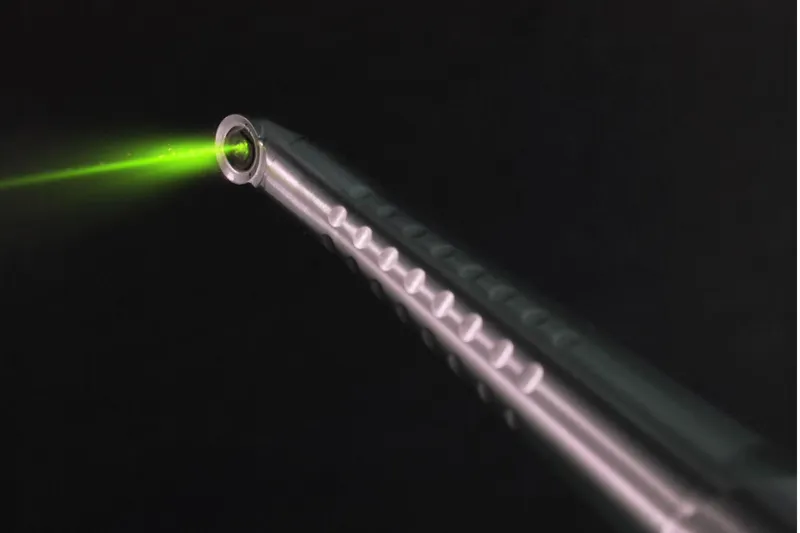
Close-up of a dental laser's green guide light
Focused light
A dental laser handpiece in a darkened room
Settings chosen for each treatment
Our approach

Explained before it's used.

Suitability first

A laser is recommended only when it suits your treatment, never just because it is available.

Honest advice

If a standard approach would work better for you, your dentist will say so.

No surprises

You'll know whether your treatment involves a laser, and what to expect, before you sit in the chair.

FAQs

Dental laser questions.

It is a dental laser unit that produces two different wavelengths, for example one absorbed by water and one that reaches deeper into soft tissue, so it can be used for a wider range of jobs than a single-wavelength laser.
Dental lasers are widely used in dentistry. As with any treatment, safety depends on using the right settings for the right job, protective glasses for everyone in the room and a proper assessment of your health first.
It depends on the treatment. Laser whitening and desensitisation usually need no anaesthetic, while gum contouring is done with the gum numbed. Your dentist will explain what to expect.
Put simply, erbium lasers such as Er:YAG are absorbed by water and suit precise work on teeth and gums, while near-infrared lasers such as Nd:YAG reach deeper into soft tissue and help reduce bacteria.
Lasers can be used in gum lifts and contouring, gum depigmentation, gum disease therapy, snoring treatment, cavity treatment, root canal cleaning, tooth desensitisation, tongue and lip tie release, whitening and more. Each has its own page on this site.
Some can be, such as laser cavity treatment for suitable small cavities or tongue and lip tie release for school-age children. Suitability depends on the child and the treatment, and is discussed at an assessment.
We accept most health funds with on-the-spot HICAPS claims. Afterpay, Zip Pay, Humm and SuperCare are available, subject to eligibility and each provider's terms. Costs are explained before treatment.

Could a laser treatment suit you?

A visit to Magical Smiles Point Cook is the quickest way to find out. Have questions first? Give us a call.

Book online (03) 8338 1515

Magical Smiles Point Cook

Address220 Point Cook Road, Point Cook VIC 3030
HoursMon – Sat · 9:00 AM – 5:00 PM
Get directions

General information only. Suitability, comfort and outcomes vary. Some laser treatments are minor surgery, and any surgical or invasive procedure carries risks. Your dentist will confirm what applies to you.


Next step

Find out what suits you.

Book a visit at Magical Smiles Point Cook to find out whether a laser treatment is worth considering, with clear advice before you decide.

Magical Smiles Point Cook · 220 Point Cook Road VIC 3030 · info@magicalsmilespointcook.com.au
This page is general information, not personal advice. Suitability, comfort and outcomes vary between people.

Our locations