
Point Cook · Laser cavity treatment
Laser cavity treatment in Point Cook
Laser cavity treatment removes tooth decay with pulses of light and water instead of a drill. At Magical Smiles Point Cook it is an option for many small and early cavities, and some need little or no numbing. Your dentist checks the tooth first and tells you whether a laser or a standard filling suits it better.
Why people wait
A calmer way to have a filling
Fixing a small cavity is simple. The hard part is everything around it.
Ask people why they delayed a filling and you rarely hear "pain". You hear about the drill, the numbing needle, a lip that stays fat and floppy until mid-afternoon, and the time off work. So the cavity waits, and while it waits the decay keeps spreading into the tooth.
If that sounds familiar, you have plenty of company. The Australian Institute of Health and Welfare (AIHW, page updated 6 August 2026) reports that around 1 in 3 adults with their own teeth (32%) had at least one tooth with untreated decay in 2017–18, and around 1 in 4 children aged 5–10 (27%) had untreated decay in a baby tooth in 2012–14. Decay that has not yet made a hole can be treated by a dental professional with fluoride paste or varnish, healthdirect notes (last reviewed February 2025), which is one more reason not to wait.
A laser handles the decay-removal step differently. Rapid pulses of light, cooled by a fine mist of water, lift the soft decayed tissue away. Nothing spins or rattles against the tooth, and there is no high-pitched whine. Where the cavity is small and shallow, some patients need no anaesthetic at all, so they can eat, talk and get back to their day straight afterwards. A similar laser technique is used for laser ceramic debonding when an old ceramic restoration has to come off.
It is not the right tool for every cavity, and your dentist will be straight with you about that. But if the word "filling" makes you put the appointment off, it is worth asking about.
Who this is for
Does one of these sound like you?
A laser suits some teeth and some people more than others. These are the moments when Point Cook patients most often ask us whether it could work for them.
01
A filling has been on your to-do list for a while.
Your dentist spotted it at a check-up and you meant to book. Small cavities are the ones laser dentistry in Point Cook handles best, so sooner really is easier.
02
The sound of the drill puts you off.
For some people the noise is worse than the treatment. A laser makes a light popping or tapping sound instead of a whine.
03
You would rather skip the needle.
Shallow decay can sometimes be treated with no injection. For many needle-shy patients, that one change is what makes the visit possible.
04
Your child needs a first filling.
How that first filling goes can colour how a child feels about the dentist for years. A quieter visit, sometimes without a needle, can help it go smoothly.
05
The tooth is already sensitive.
There is no grinding friction, and a cooling water mist runs the whole time. Your dentist checks how the tooth responds before starting.
06
You want to keep as much natural tooth as possible.
The laser works mainly on the decayed tissue, which helps preserve the healthy tooth around it. It also leaves a clean, slightly textured surface for the bonded filling.
The science, simply
How light clears decay without a drill.
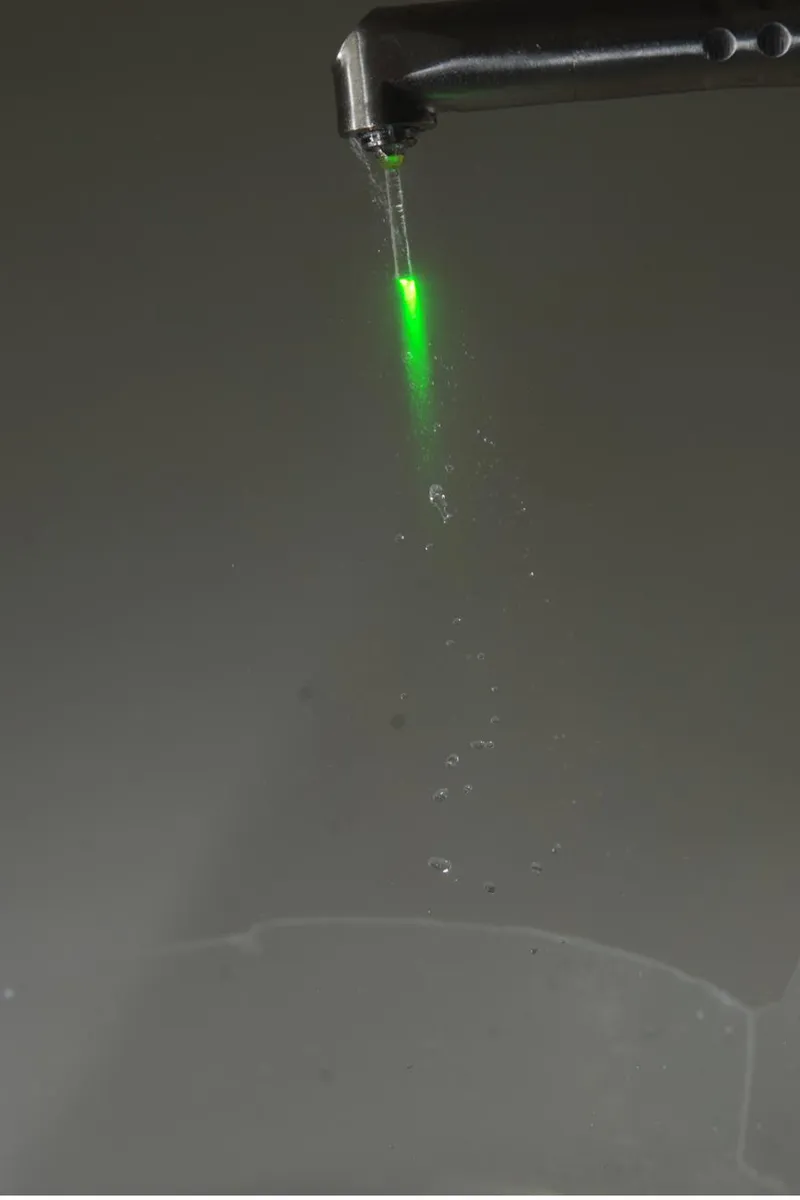
Lasers come in different wavelengths, and each behaves differently in the mouth. Lasers made for teeth, such as erbium lasers, use a wavelength that water soaks up readily. That is the key to how they work.
i. Why water matters
Decay holds more water.
Softened, decayed tooth contains more water than sound enamel. Because the laser's energy is taken up by water, it acts on the decayed tissue first and has much less effect on the healthy tooth nearby.
ii. Tiny bursts
Lifted away layer by layer, not ground.
Each pulse lasts a tiny fraction of a second. It turns the water inside the decay into vapour, which breaks the tissue away in thin layers. A water mist keeps the tooth cool throughout.
iii. Ready to fill
A clean base for the filling.
Once the decay is gone, the surface left behind is clean and slightly textured, which suits a tooth-coloured bonded filling placed at the same visit.
iv. Where it stops
What a laser can't do.
It does not remove old metal or composite fillings; those still need standard instruments. Deep or large cavities may need a mix of both methods. Your dentist explains which approach fits your tooth.
 Dental lasers
About the laser
Different lasers, different jobs. Tooth and gum need different light.
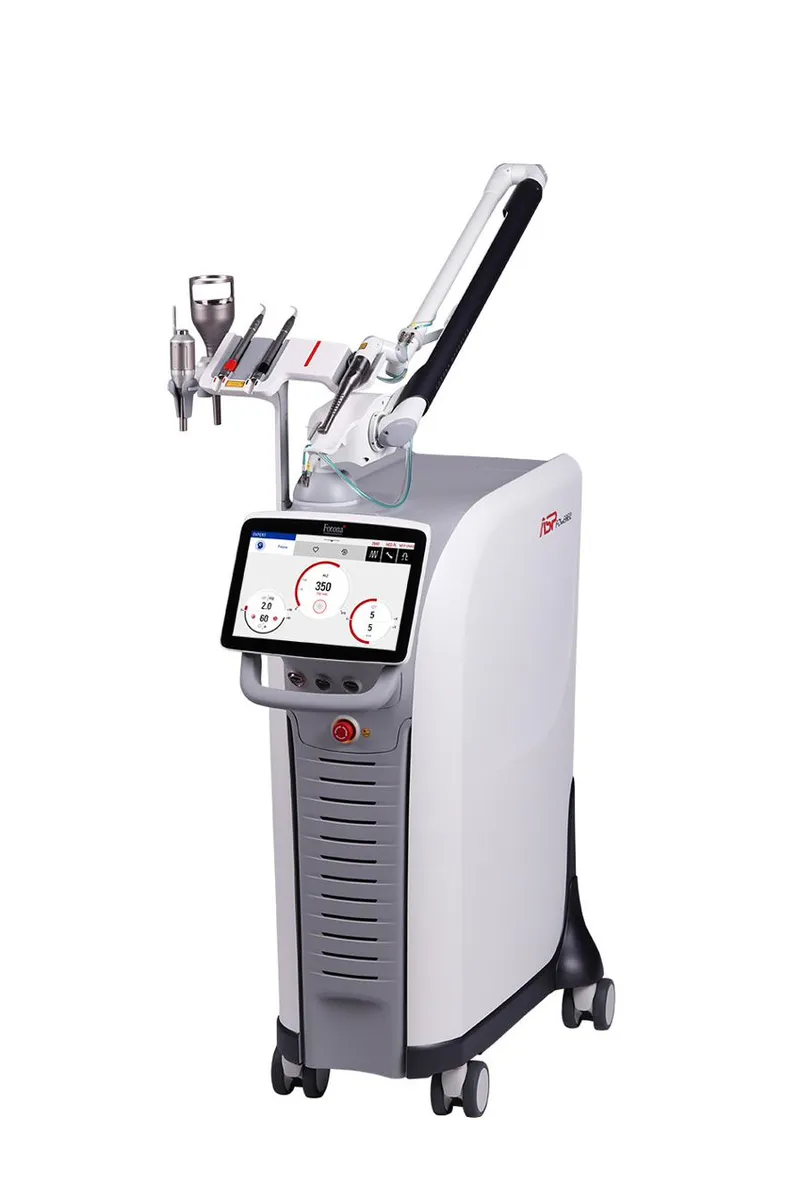
Dental lasers are built around particular wavelengths. Some suit hard tissue such as enamel and dentine; others suit soft tissue such as gum. Cavity treatment calls for a hard-tissue wavelength used with a fine water spray.
Your dentist adjusts the settings to the tooth being treated. If you are curious about the laser used for your treatment, just ask at your visit and we will explain it simply.
- Light used
- Absorbed by water in the tooth
- Cooling
- Fine water mist throughout
- Eye protection
- Glasses for you and the team
- Planning
- Agreed with you first
Your visit
Your appointment, one step at a time.
Knowing what comes next makes a visit easier. Here is the usual order of things, from the chair to the front desk.
i.
Check and x-ray
Your dentist confirms where the cavity is and how deep it goes, and shows you the image.
5–10 minutes
ii.
Talk it through
You hear whether a laser suits this tooth, what the other options are and how it will feel. Treatment starts only when you are ready.
5 minutes
iii.
Get comfortable
You put on protective glasses, and we can show you the sound and feel of the laser before we begin.
3 minutes
iv.
Numbing, if you need it
Shallow decay may need no injection. For deeper decay, your dentist numbs the area slowly and checks in with you as it takes effect.
0–5 minutes
v.
Clearing the decay
Rapid laser pulses and a cool water mist remove the decay. Expect a soft popping sound rather than a whine.
10–20 minutes
vi.
Checking the cavity
Your dentist makes sure all the decay is gone, then dries the area ready for filling.
5 minutes
vii.
Placing the filling
Tooth-coloured composite goes in layer by layer, is shaped to your tooth and is hardened with a blue curing light.
10–15 minutes
viii.
Bite and polish
We check your bite, smooth and polish the filling, and tell you what is normal over the next day or so.
5 minutes
Side by side
Laser or drill: what changes in the chair.
A standard filling is still the right choice for many teeth. This table shows, in general terms, how the experience differs when a laser suits the cavity.
Standard fillingRotary drill
With a laserDental laser
Sound
A high-pitched whine while the drill runs.
A light tapping or popping sound.
Vibration
You feel the spinning bur through the tooth.
None, since nothing spins against the tooth.
Heat
Friction warms the tooth; water cools it.
Brief pulses with a steady cooling mist.
Local anaesthetic
Needed for most cavities.
Sometimes not needed for small, shallow decay.
Precision
Cuts wherever the bur is placed.
Acts mostly on decayed tissue.
Best suited to
Large cavities and replacing old fillings.
Small to medium cavities, nervous patients, children.
Recovery
A numb lip or cheek for a few hours afterwards.
Without numbing, you can eat and talk normally straight away.
How we work
Six things you can expect from us.
A laser on its own does not make a visit gentle. Clear explanations, an unhurried pace and a plan you understand matter just as much.
i.
Exam first, advice second.
Your dentist examines the tooth and walks you through the choices before anything is decided.
ii.
A straight answer.
If a laser suits your cavity, we will tell you. If a standard filling will hold up better, we will tell you that instead, and explain why.
iii.
A plan you understand.
Before we start you will know the steps, roughly how long they take and what the treatment costs.
iv.
Comfort that goes beyond the laser.
A calm, unhurried pace, breaks when you need them and extra time for children and anxious patients.
v.
One team, one clinic.
At Magical Smiles Point Cook you will see Dr Rachna Yadav or Dr Amolak Deep, working from the same clinic at 220 Point Cook Road.
vi.
Costs made clear.
We accept most health funds with on-the-spot HICAPS claims. Afterpay, Zip Pay, Humm and SuperCare are available to eligible patients, and costs are explained before treatment. Fillings are among the services the Child Dental Benefits Schedule covers, and eligible children can claim up to $1,158 over two calendar years (or $1,132 if their two-year period began in 2025).
Questions
What patients ask us about laser fillings.
Still unsure about something? Call Magical Smiles Point Cook on (03) 8338 1515 and we will talk it through.
Is laser cavity treatment painful?
Most patients feel light tapping and a cool mist, without the vibration of a drill. Small, shallow cavities sometimes need no anaesthetic; deeper decay usually still does. Your dentist will suggest what will keep you most comfortable.
Do you still need a needle for laser fillings?
Not always. Small, shallow cavities can sometimes be treated without an injection. Deeper or very sensitive teeth are usually more comfortable numbed. If needles worry you, tell us, and see our page for anxious patients for other ways we help.
How does a laser remove decay?
It fires very short pulses of light that water absorbs. Decayed tooth holds more water than healthy enamel and dentine, so the energy breaks down the decay first. A water mist keeps the tooth cool.
Can children have laser fillings?
Many can, especially children who are upset by the drill's noise or vibration. Whether it suits your child depends on the cavity and on how they cope in the chair, and your dentist will talk it through with you both.
How long does a laser filling appointment take?
Allow roughly 30 to 60 minutes for one tooth, including the bite check. Larger cavities take longer, and we will give you a time when we book.
Can a laser remove my old fillings?
No. Old metal or composite fillings are taken out with standard instruments. Once they are out, the laser may help clean the tooth underneath before the new filling goes in.
Does the laser heat up the tooth?
The pulses are extremely brief and a water mist runs the whole time, which keeps the tooth cool. You and the team wear protective glasses while the laser is in use.
Will my health fund cover a laser filling?
Rebates depend on your fund and level of extras cover, so ask us for the item numbers on your quote and check with your fund. We offer on-the-spot HICAPS claims, and eligible children may be able to use the Child Dental Benefits Schedule.
Where can I have laser cavity treatment in Point Cook?
Magical Smiles Point Cook, 220 Point Cook Road, Point Cook VIC 3030. We're open Monday to Saturday, 9:00 am to 5:00 pm. Call (03) 8338 1515 or book online.
Is laser cavity treatment new?
No. Dentists have used lasers to prepare cavities since the late 1990s. It is still one option among several, and your dentist will recommend the method most likely to last for your tooth.
Find us
Laser fillings on Point Cook Road.
You'll find Magical Smiles Point Cook at 220 Point Cook Road, open six days a week. Phone (03) 8338 1515 to book a time that suits you.
More laser care
Other laser treatments at Point Cook.
Lasers are used for more than fillings. These pages explain other treatments you can ask us about.
Next step
Cavities don't get smaller by waiting.
The earlier a cavity is treated, the smaller the filling tends to be. Book a visit at Magical Smiles Point Cook to find out whether a laser suits your tooth. You are under no obligation to go ahead, and we will tell you if a standard filling is the better choice.