Pass 01
Near-infrared light
Reducing bacteria
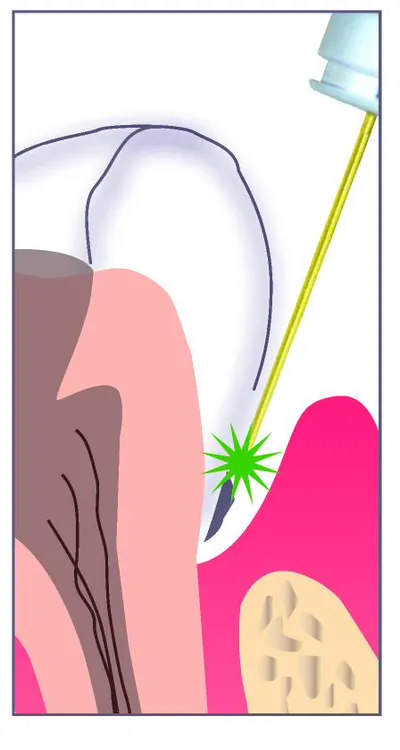
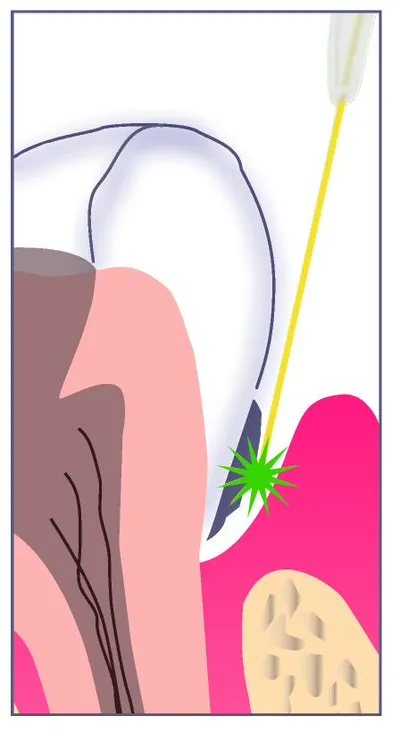
A thin fibre goes into the pocket. The light acts on bacteria and inflamed lining and can help limit bleeding for the rest of the visit.

Dual-wavelength laser periodontal therapy treats gum disease by using two kinds of laser light inside the gum pocket: one aimed at bacteria and inflamed tissue, one at hardened deposits on the root. At Magical Smiles Point Cook it is one option your dentist may suggest after measuring your gums, alongside deep cleaning and regular reviews.
Gum disease news often arrives as a list of numbers, "four millimetres here, six there", and a recommendation that can feel overwhelming. No wonder people put the next step off.
Dual-wavelength laser periodontal therapy is a minimally invasive way to treat gum pockets, using two laser wavelengths one after another in the same appointment. It is recommended only where it suits your gums, and usually sits alongside deep cleaning and regular reviews. Either way, your plan is explained before anything starts.
Gum disease becomes more common with age. The national adult oral health study of 2017–18 found moderate or severe periodontitis in 12% of adults aged 15–34, 33% of those aged 35–54, 51% of those aged 55–74 and 69% of people aged 75 and over (AIHW, page updated 6 August 2026). As healthdirect puts it (last reviewed February 2025), periodontitis can't be cured, but it can be controlled.
You don't need any science background to follow this page. We explain it simply, so you can take part in decisions about your gums.
A diseased gum pocket holds several problems at once: bacteria, inflamed lining and hardened tartar on the root. Different kinds of light are absorbed by different materials, so using two wavelengths lets each part of the pocket be treated by the light best suited to it.
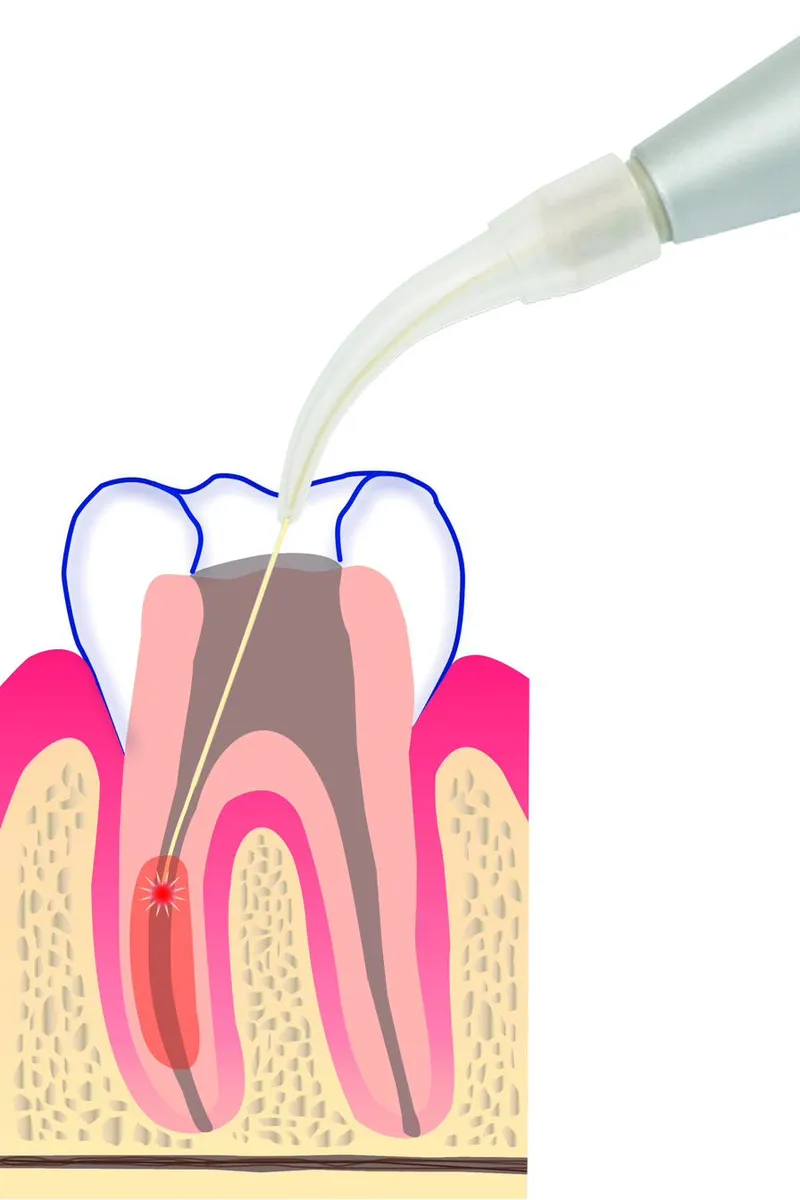
This kind of light is taken up by dark pigments, such as those in inflamed tissue and in many gum disease bacteria. It has less effect on healthy tissue, so it acts mainly where the problem is.
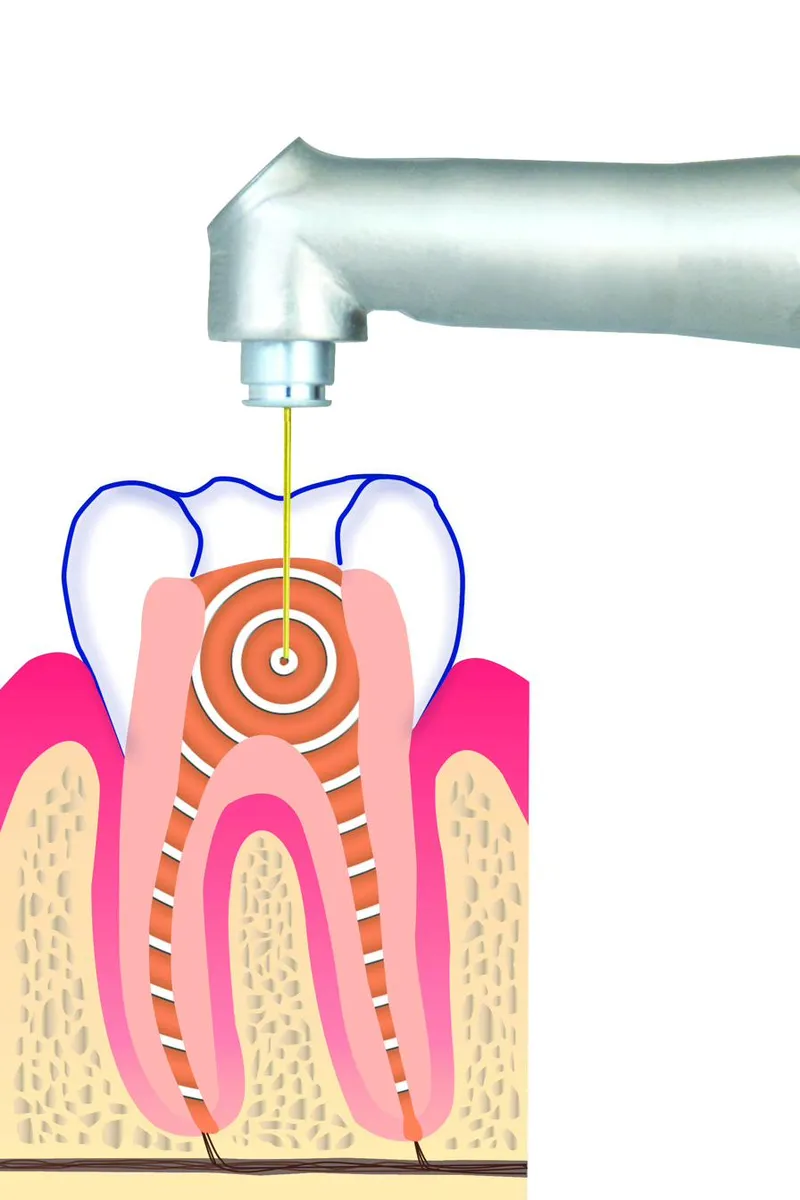
This kind of light is taken up by water, which makes it useful for loosening tartar and cleaning the root surface inside the pocket. It works in very thin layers, giving your dentist close control.
In simple terms: a single wavelength suits only some of the jobs inside a gum pocket. Using two lets your dentist address the bacteria and the root surface in the same visit, where this approach suits your case.
Treatment usually follows a set order: first wavelength, second wavelength, then the first again. Your dentist explains each step as it happens and pauses whenever you have a question.
A thin fibre goes into the pocket. The light acts on bacteria and inflamed lining and can help limit bleeding for the rest of the visit.
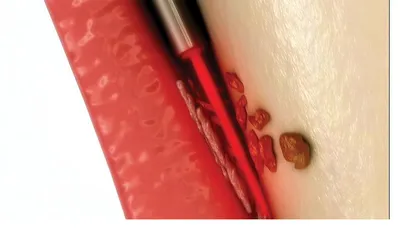
The second wavelength helps remove tartar from the root inside the pocket, in very thin layers. Hand instruments may be used as well.
A last pass with the first wavelength helps a stable clot form in the pocket, which supports healing over the following days.
Bacteria, gum lining and tartar absorb light differently, so two wavelengths cover more of the work.
The laser can help limit bleeding during and after treatment, and many people find recovery easier than expected.
Treatment happens inside the existing pocket, without the cut-and-stitch flap surgery used in some gum treatment.
All three steps are usually completed in a single appointment for each area treated.
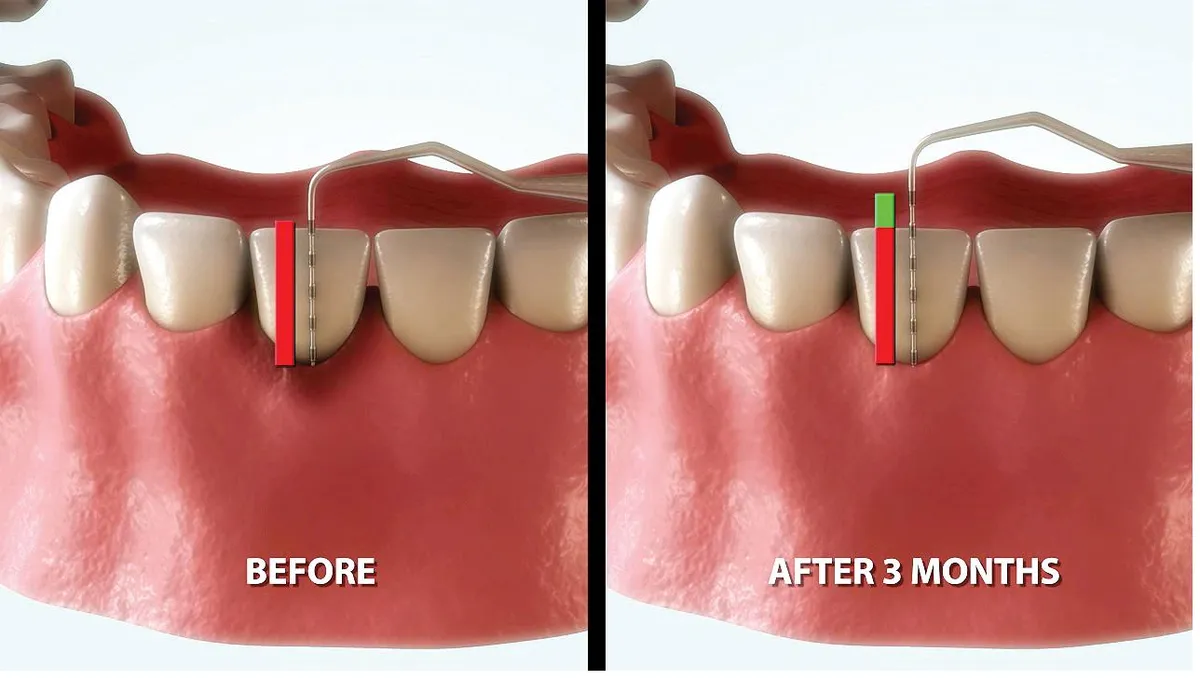
People often tell us they didn't know what to expect. Here is what the next few months usually look like.
If your gums have been flagged more than once, you are not alone, and the next step is usually simpler than people fear.
Your dentist measures every gum pocket, takes x-rays if needed and reviews earlier records, then explains the findings simply. Treatment is booked only when the plan makes sense to you.
The area is numbed if needed. The first wavelength, then the second, then the first again are used in each pocket, and we stop whenever you ask.
Most people get back to normal activities the same day. You'll get aftercare advice on eating and brushing, and you can call us if anything feels wrong.
At review visits, often around six weeks and three months, we measure the pockets again. Maintenance cleans are then planned around how your gums respond.
Whether laser therapy suits you depends on your pocket depths, bone levels, medical history and how advanced the gum disease is. These lists can help you decide whether to book an assessment; they are not a diagnosis.
About the names. You may have searched for LANAP, a trademarked US laser protocol linked to one system, which we don't perform. Our laser gum treatment (LAPT) page explains the laser-assisted gum care we offer. Your assessment decides whether a laser-based or conventional approach suits you. For decay rather than gums, see laser cavity treatment.
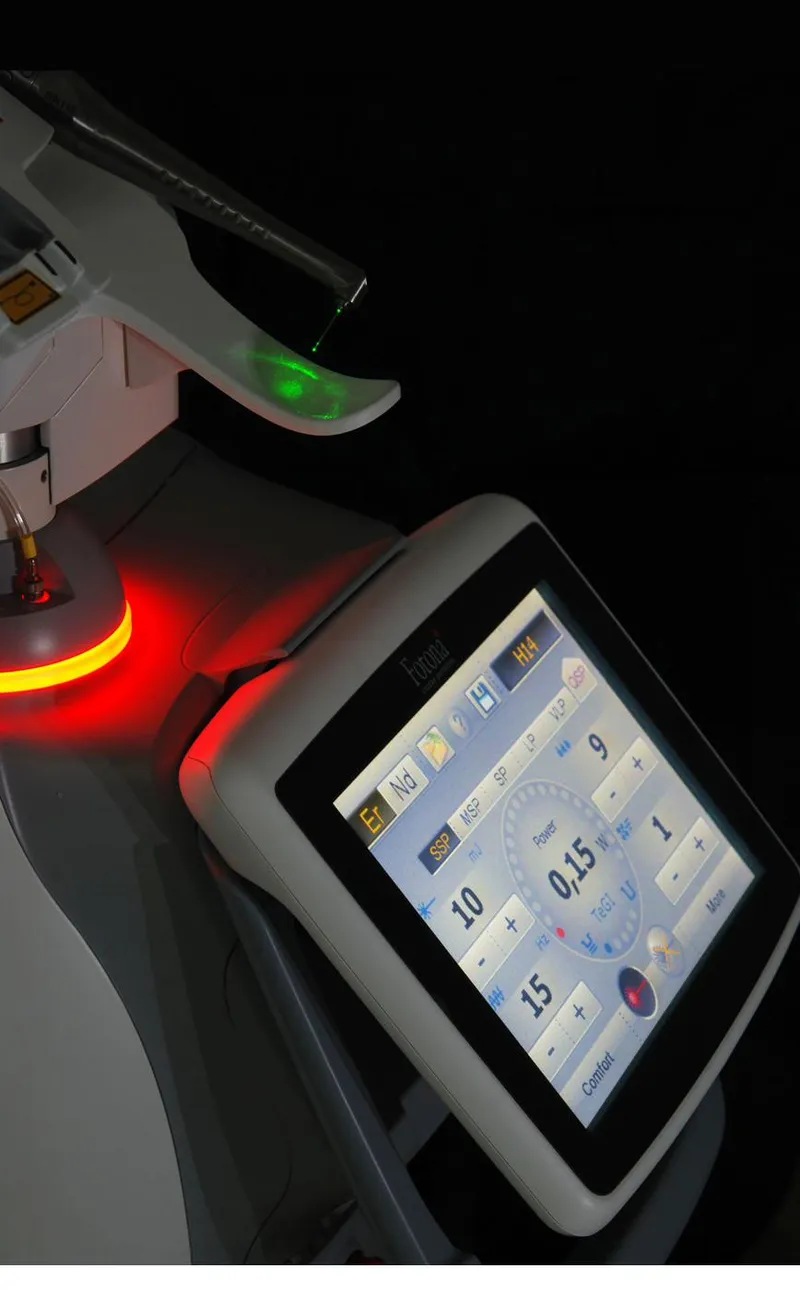
Dual-wavelength therapy pairs a near-infrared laser, absorbed by pigment, with a mid-infrared laser, absorbed by water. Your dentist will explain the laser approach planned for your gums before treatment.
220 Point Cook Road, Point Cook VIC 3030
A gum assessment at Magical Smiles Point Cook will show whether laser therapy suits you. If it doesn't, you'll leave knowing what will.
Laser periodontal therapy is provided only where clinically appropriate, after a full gum assessment. Suitability, plans and outcomes differ between people. This page is general information, not clinical advice. Dr Rachna Yadav and Dr Amolak Deep are registered with AHPRA.