This clinic
01Point Cook
Address220 Point Cook Road, Point Cook VIC 3030
Phone(03) 8338 1515
HoursMon–Sat 9:00 am–5:00 pm

At Magical Smiles Point Cook, a dental crown covers and protects a cracked, worn or heavily filled tooth, and a bridge fills the gap left by a missing tooth using the teeth either side for support. Both are planned at 220 Point Cook Road after an examination, with the cost set out in writing first. If you've been chewing on one side or hiding a gap in photos, this is where to start.

When noticing turns into booking
Nobody plans to see a dentist about a crown. The nudge usually arrives as a small workaround you've stopped noticing. Do any of these sound like you?
Chewing on one side, out of habit rather than choice.
A tooth with a crack, a chip or more filling than tooth.
A gap that's stopped you smiling with your mouth open in photos.
A new twinge with hot or cold that wasn't there before.
A tooth that has changed shape or colour, sometimes years after root canal treatment.
Every cosmetic option we offer is listed on our cosmetic dentistry page.
Book an assessment, or compare crowns and bridges first.
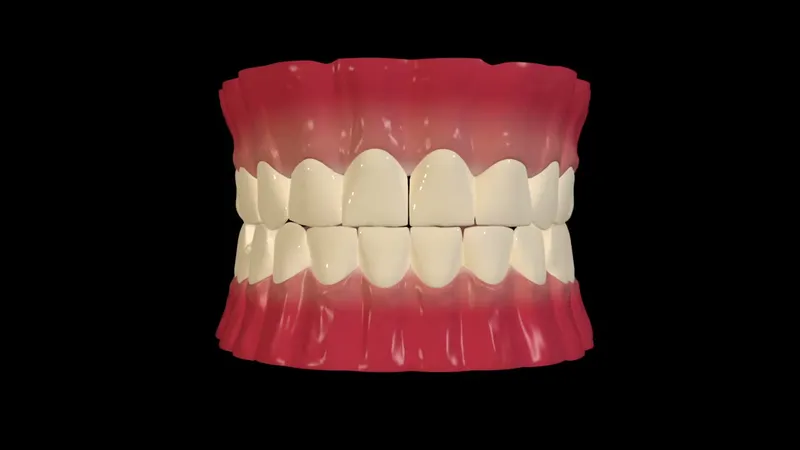
A 3D view of how a tooth is prepared
A dental crown is a cap made to cover the whole visible part of a tooth. Where a filling plugs a hole, a crown holds what's left of the tooth together and takes the force of chewing itself, so the weakened tooth underneath no longer does the heavy lifting.
That's why crowns suit teeth that are cracked, worn down or brittle after root canal treatment. They also change how a tooth looks, so a darkened or misshapen tooth can be rebuilt inside one. The material matters: porcelain, zirconia and porcelain fused to metal all behave differently, and the right choice depends on the tooth and where it sits in your bite.
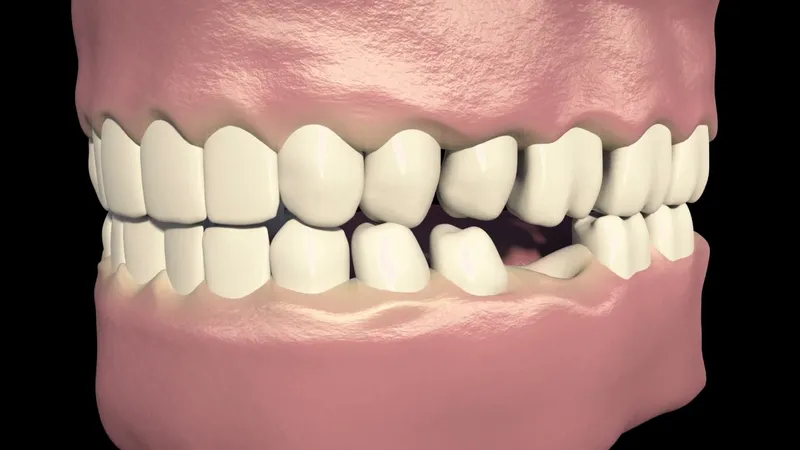
Preparing the teeth that will anchor a bridge
A dental bridge replaces a missing tooth by spanning the gap. The teeth on either side are shaped to hold crowns, and a replacement tooth is attached between them so the whole span is one fixed piece. It doesn't come out for cleaning and doesn't move when you chew.
The trade-off is that the supporting teeth need shaping even if they're healthy, because the bridge needs anchors. If keeping those neighbouring teeth untouched matters more to you, a denture or a dental implant may be worth discussing. Comparing all three honestly is part of your assessment, not an upsell.
You don't need to know which one you need before you come in. Here's the short version, and your dentist will talk through the rest with you.
For a tooth that's still in place but weakened: cracked, heavily filled or made brittle by root canal treatment. The crown becomes the tooth's new outer layer, restoring its strength and shape. Only that one tooth is treated, and the teeth beside it are left alone.
One tooth · protects what remains · often follows root canal treatmentFor a gap of one or more teeth where the neighbouring teeth are strong enough to hold crowns. The replacement tooth is joined into the span, so nothing is removable and nothing shifts when you eat. A good fit when the anchor teeth could benefit from crowns anyway.
Fills a gap · fixed in place · supported by neighbouring teethCrown, bridge, implant or denture: each suits a different situation. What decides it is the condition of the tooth, the health of its neighbours and what matters most to you. Nothing on this page is a diagnosis, and suitability varies from person to person.

Most crown and bridge plans follow a similar pattern over a few appointments. Knowing what's coming makes it easier to plan around work and family.
01 · Assessment.
Your dentist examines the tooth or gap, taking x-rays where they help. You'll hear the options, including any you might not need. Nothing is decided on the day.
02 · Preparing the tooth.
The tooth, or the anchor teeth for a bridge, is shaped to make room for the restoration. A scan or impression is taken so the piece can be made to fit.
03 · A temporary goes on.
Before you leave, the prepared tooth is covered with a temporary crown or bridge to protect it and keep things looking and working normally.
04 · Fitting the final piece.
Your finished crown or bridge is checked for fit, bite and colour, adjusted if needed, then fixed in place. We take our time at this visit.
05 · A quick review.
A short follow-up confirms everything feels comfortable and allows for any fine-tuning.
Between the preparation visit and the fitting visit, your crown or bridge is being made. Knowing that explains why the process isn't finished in one sitting.
What happens in between
A restoration that fits well has to be made from an accurate copy of your tooth and bite. That copy goes to a dental laboratory, where the crown or bridge is made to measure. The temporary fitted at your preparation visit protects the tooth in the meantime.
How long that takes depends on the tooth, the material and the laboratory, and appointments can be spaced to suit your schedule. Either way, you'll know the expected number of visits and the full cost before treatment starts.
Know the figure. Then make the decision.
Cost is often the question people leave until last, then worry about on the drive home. We'd rather talk about it early, in plain numbers. We accept most health funds with on-the-spot HICAPS claims, and instalment options mean a needed repair doesn't have to wait for a lump sum.
Wondering what a crown or bridge could cost week to week? Open the repayment estimator → →
About the estimator: it gives an indicative figure only, based on typical per-tooth pricing, and isn't a quote. Every crown or bridge is priced individually once we've examined the teeth involved and taken any x-rays needed, and you'll always see the exact cost in writing before agreeing to treatment. Repayment figures are illustrative and use Humm/NDP's own plan-fee formula for the term selected, so Humm's fees are included; finance is subject to Humm's eligibility criteria and approval, and may not be granted.
We accept





Crown, bridge or something else is explained in everyday language, with time to think it over. You won't be asked to choose at the assessment.
The shape is planned around how your teeth meet, not just how the tooth looks. A temporary protects the tooth while the final piece is made.
Routine check-ups are where small changes get picked up. Keeping a crown or bridge comfortable is mostly about noticing issues early.
Bring the tooth, or the gap, and any questions you've been carrying around. A proper look usually tells you more than hours of searching online. Book an assessment or call (03) 8338 1515.
Magical Smiles Point Cook
220 Point Cook Road, Point Cook VIC 3030
Monday to Saturday · 9:00 am – 5:00 pm · Sunday closed
Get directions
This page is general information, not personal advice. How treatment fits and feels varies between people, so your dentist will examine the tooth and explain what's realistic before anything is agreed.
Crown and bridge treatment is carried out by Dr Rachna Yadav, our Principal Dentist (BDS, AHPRA DEN0001046139), or Dr Amolak Deep (AHPRA DEN0002514296).
Both are general dentists. If your case needs a specialist's input, we'll name the specialty and help you arrange the referral.
One assessment is usually enough to tell whether a crown, a bridge or another option is right, with a clear written cost in front of you before you choose.