Trouble with some textures
Gagging on lumpy food, avoiding meat or bread, storing food in the cheeks, or very slow meals. How freely the tongue moves affects how a child chews and swallows.

At Magical Smiles Point Cook, a possible tongue or lip tie starts with an assessment of how your child's tongue and lip actually move. We only recommend a laser release when the tie is causing a real problem with speech, eating or the teeth and gums. We see school-age children, teenagers and adults at 220 Point Cook Road; babies are best assessed by a paediatric specialist. Call (03) 8338 1515 with any questions before you book.
Assessment first · many ties never need release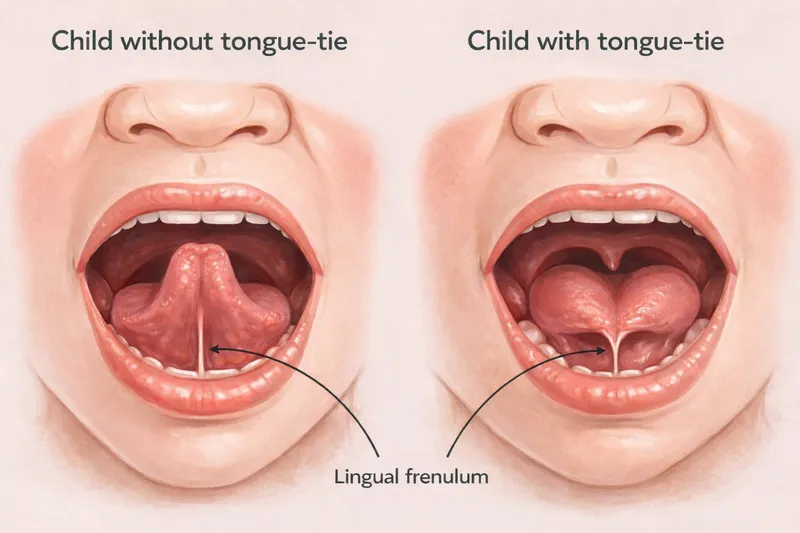
This diagram is a general illustration. Every child's anatomy is different.
Under the tongue is a thin band of tissue called the lingual frenulum. Usually it's loose enough for the tongue to lift, stretch and move freely. When the band is shorter, thicker or attached further forward than usual, it can limit how the tongue moves, and that's what's called a tongue tie. A similar band under the top lip can limit lip movement; that's a lip tie.
How a tie looks doesn't decide anything on its own. What matters is whether it's causing a problem, so we check both the anatomy and how the tongue or lip works in practice. That functional check is what tells us whether release is worth considering for your child.
None of these confirms a tie on its own, and not every speech or eating difficulty is caused by one. They're simply what parents most often describe at a first consultation.
Gagging on lumpy food, avoiding meat or bread, storing food in the cheeks, or very slow meals. How freely the tongue moves affects how a child chews and swallows.
Ongoing difficulty with r, l, s and th, sounds that need the tongue tip to lift. A speech pathologist leads here, and we help when a restriction is clearly part of the picture.
A persistent gap between the top front teeth held open by a thick band of lip tissue. It often comes up during orthodontic planning.
A tight band under the upper lip that may contribute to a gap between the front teeth, a spot where food keeps catching, or gum recession at the front.
At Magical Smiles Point Cook we treat school-age children, teenagers and adults who can sit through a dental appointment with local anaesthetic. We don't release tongue or lip ties in babies and infants. Very young children are best assessed by a paediatrician or paediatric specialist, where the approach and setting are designed for that age.
If that's where you are now, you're still welcome to call us. We'll point you towards the right assessment for your baby's age, and we'll be here when your child is older.
The release itself is quick. Most of the time goes into getting the assessment right, making sure you understand your options, and setting up aftercare you can manage at home.
We take a full history: why you've come in, any speech or eating concerns, and what we can see in the mouth and gums. There's no rush, and you're welcome to bring someone with you.
We check how far the tongue lifts and moves side to side, listen to speech where relevant, and examine the teeth and gums. Where it helps, we work with your speech pathologist, orthodontist or GP.
We explain what we found, whether release is indicated, what to expect and the alternatives, including leaving it alone. You'll get a written quote and timing before you decide.
If you go ahead, we numb the area slowly with local anaesthetic and check it's fully numb before starting. Everyone in the room wears protective eyewear.
With the area fully numb, the laser part usually takes around a minute or two. In most cases there's no scalpel, no scissors and no stitches.
We show you the gentle stretches to do at home over the next two to four weeks, with written instructions and a number to call if anything worries you. A review one to two weeks later checks healing and movement.
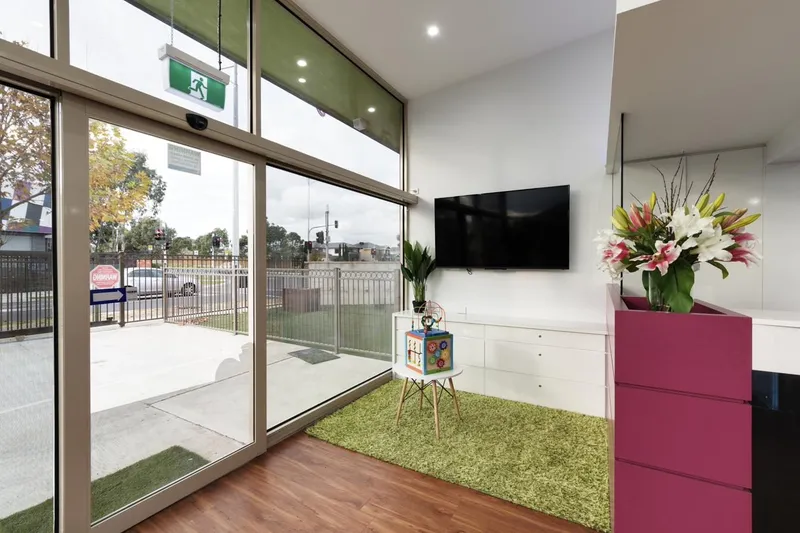
We plan an appointment like this around your child, not the clock: plenty of time, everything explained in words they understand, and room for a parent or sibling to stay close if that helps.
Local anaesthetic is given slowly, and we check in with your child throughout. If they need a break, we stop.
For older children, teens and adults, it usually feels more like a long filling than surgery. You settle into the chair, the area goes numb, the laser part is over quickly, and you leave with aftercare instructions and a review date.
This page is the parent's guide. The clinical page explains how dental lasers are used, how laser release compares with scissors, and each step of the appointment in more detail. You'll find it at Laser Tongue & Lip Tie Release.
For everything else we do for children, including first visits, check-ups, bulk-billed CDBS care and early orthodontics, start at our children's dentistry page.
If there's something else you'd like to know, just call. We'd rather answer twenty questions before you book than have you book unsure.
Book a consultation when it suits you. We'll assess carefully, explain clearly, and only recommend release when it's needed. The first visit answers the question; it doesn't commit you to anything.