The gum bleeds when you brush or floss.
Bleeding is often the first sign of inflamed gum around an implant, and at this early stage it can usually be reversed.

Peri-implantitis is an infection of the gum and bone around a dental implant. Laser-assisted treatment at Magical Smiles Point Cook helps clean bacteria off the implant surface and calm the inflamed gum, alongside careful hand cleaning. If the gum around your implant bleeds, looks puffy or tastes bad, have it checked soon: the earlier it is treated, the more can usually be done.
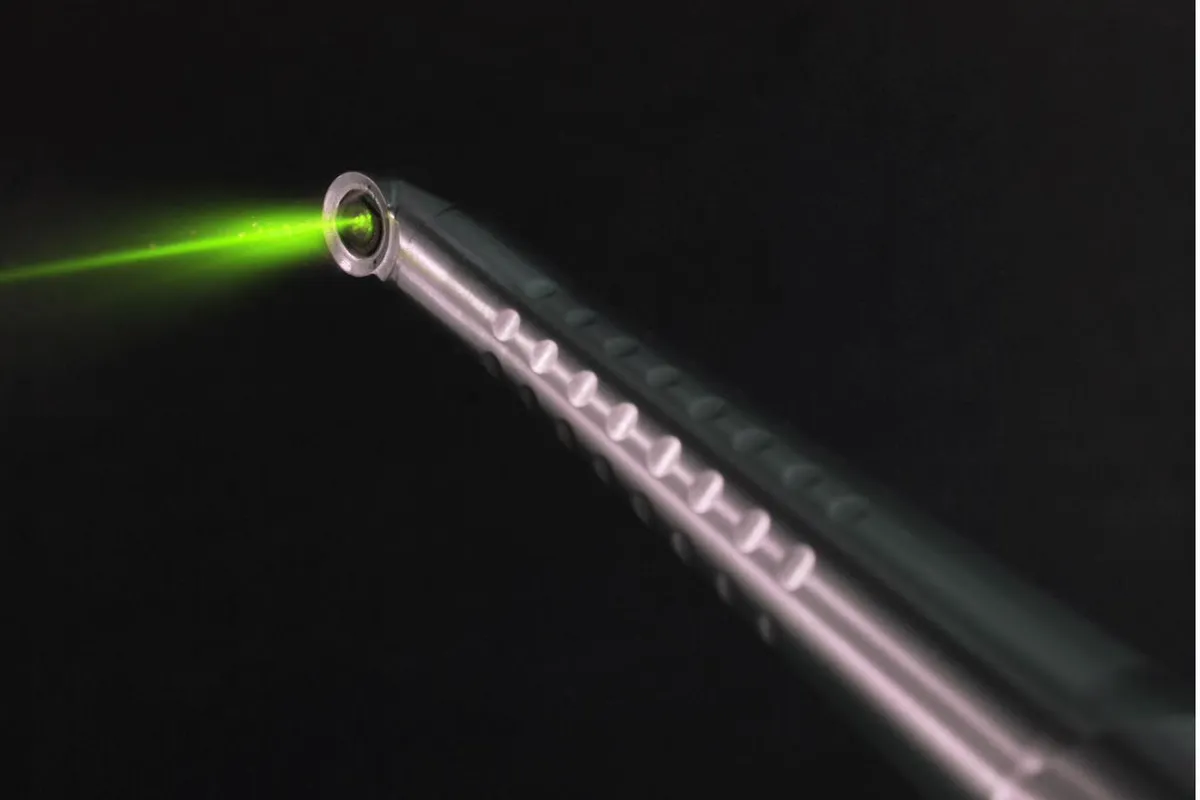 Laser tip
 Guide light
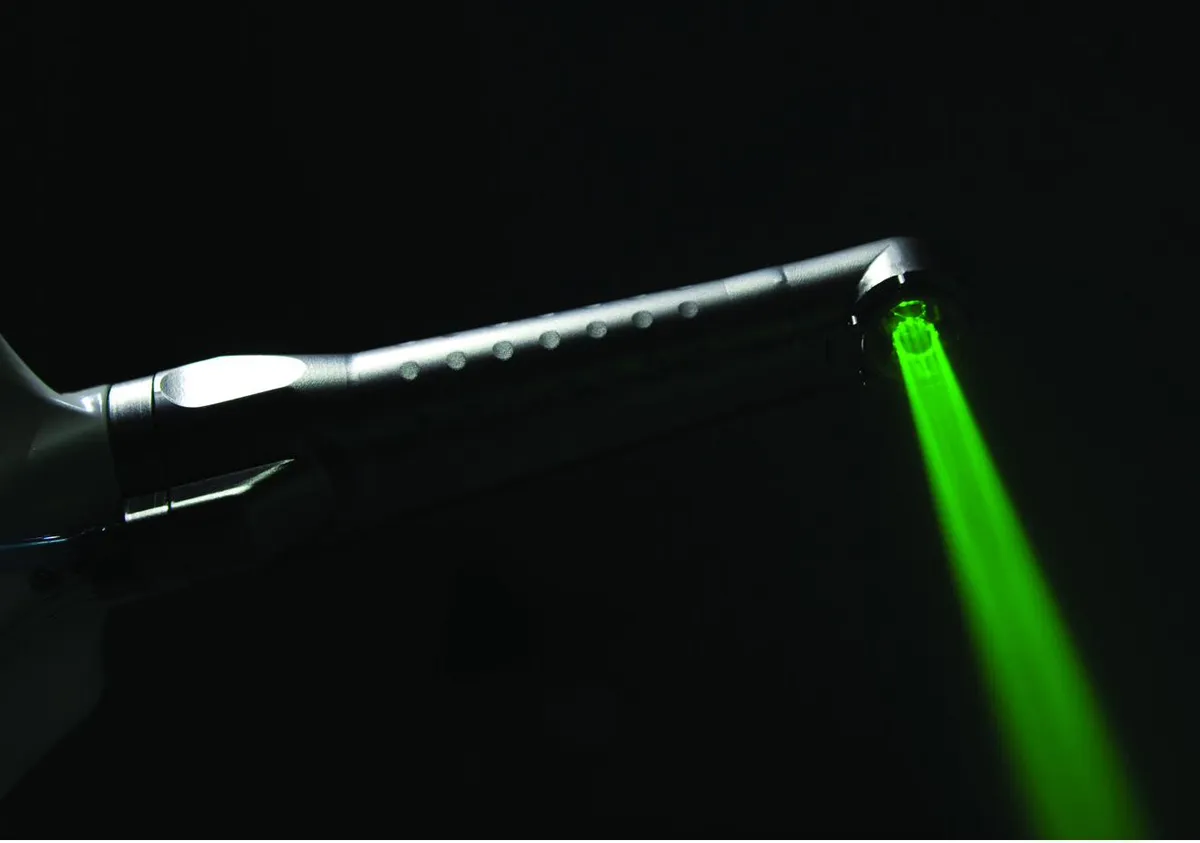 Gentle on titanium
A dental implant is a titanium post that fuses with your jawbone and carries a crown. Most implants do their job well for many years.
Implants are one way to replace missing teeth, and missing teeth are common. In the national adult oral health study of 2017–18, 1 in 10 Australian adults aged 15 and over (10%) had fewer than 21 natural teeth, 4.0% had none left, and 30.1% had moderate or severe periodontitis around their natural teeth (AIHW, page updated 6 August 2026).
But implants can get gum disease too. Plaque bacteria, the same kind that cause gum disease around natural teeth, can build up on the implant and inflame the gum. Without treatment, the infection can eat into the bone that holds the implant, so any change is worth checking early.
The Better Health Channel notes that it is harder to clean around an implant than around a natural tooth, and that gum disease around an implant can be very difficult to treat.
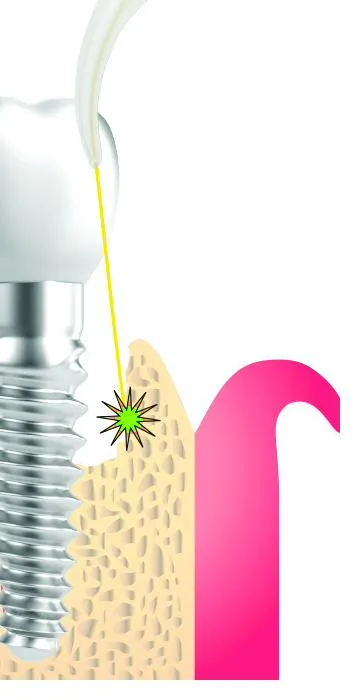
Implant surfaces are slightly rough so bone can grip them, which also makes them hard to clean with ordinary tools. Laser energy can help remove bacteria and inflamed tissue from the surface without scratching the titanium.The goal is to stop the infection and keep the implant stable. Your dentist will tell you honestly what can be achieved. It is one of several treatments on our laser dentistry page; for gum disease around natural teeth, see laser gum treatment.
Problems around implants are easiest to treat when caught early. If you notice any of these, book an assessment, even if your last check-up was fine.
Bleeding is often the first sign of inflamed gum around an implant, and at this early stage it can usually be reversed.
The gum may look puffier than elsewhere, or no longer sit snugly around the implant crown.
Bone loss is sometimes spotted on a routine x-ray before you feel anything. healthdirect (last reviewed February 2025) lists x-rays among the things a dental check-up may include, for example to look for damage to the jaw bone.
A taste that won't go away, or pus when you press the gum, points to infection and should be checked promptly.
Tenderness when biting, a feeling of movement or food catching around it are all reasons to book in soon.
Implants need regular check-ups just like natural teeth. If yours has been a while, start with an assessment.
Mouthwash alone can't clear peri-implantitis. The bacteria settle into the fine texture of the implant surface, which is there to help bone bond. The challenge is to clean that surface thoroughly without harming it.
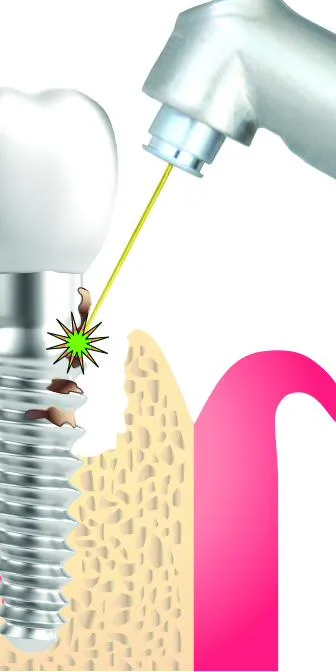 Laser-assisted cleaning
Metal scalers can scratch the implant, ultrasonic tips struggle to follow the threads, and plastic tools can miss bacteria in tiny grooves. The texture that helps an implant bond to bone also gives bacteria somewhere to hide.
Suitable dental lasers, used at the right settings, can remove plaque and inflamed tissue from around an implant without scratching or overheating the titanium.
Laser energy also helps lower the number of bacteria in the gum pocket around the implant, supporting the cleaning your dentist does by hand.
Treatment aims to stop the infection, settle the gum and give the tissues around the implant the best chance to stabilise.It does not rebuild lost bone. If a large gap in the bone remains, grafting may be discussed as a separate step, often with a specialist.
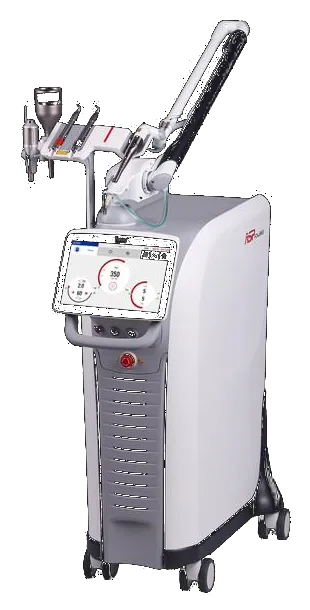 Dental laser
Research into lasers for peri-implantitis is still growing, and there is no single agreed method. Your dentist will explain the approach suggested for your implant and why.
Laser settings are chosen for the job at hand, and you and the dental team wear laser safety glasses during treatment.
Advanced cases often need a specialist periodontist. Our general dentists will tell you at your assessment if we think a referral is the better option.
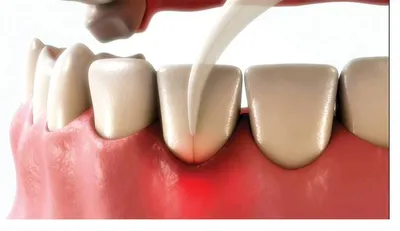
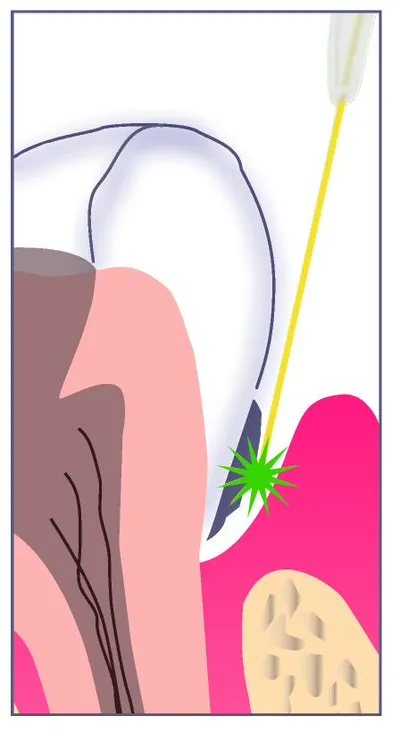
Peri-implant disease is managed over time. Treatment takes a few visits, and the care that follows is just as important.
Your dentist measures the gum around the implant, checks for bleeding and takes an x-ray to see the bone level.
Is it gum inflammation only, or has bone been affected? What might be causing it? We explain what we found.
The recommended treatment, number of visits, follow-up schedule, costs and realistic outcomes are explained before you decide.
Local anaesthetic is used if needed, and the area is prepared for cleaning.
Plaque and inflamed tissue are removed from the implant surface and pocket, using hand tools and laser energy.
The pocket is treated to reduce the bacteria left behind.
We show you how to clean around the implant each day and which brushes or aids suit it best.
Reviews are spaced out over the following year, then set to suit how your gums respond. It is managed over the long term rather than fixed once.
There is no single agreed treatment for peri-implantitis, and every case is different. This is a general comparison.
Peri-implant disease can progress quietly. What matters most is a clear diagnosis, honest advice and a plan you can stick to.
Where suitable, laser energy is combined with careful hand cleaning of the implant.
You'll know whether it is gum inflammation or peri-implantitis, how much bone is affected and what treatment can realistically do.
If your case needs a specialist periodontist, we will tell you and help arrange a referral.
Ongoing care decides how well the implant does long term, so we plan a schedule you can keep.
Measurements, photos and x-rays are recorded and explained so you can see changes over time.
If your implant was placed at another practice, bring any records you have and we can still assess it.
These are the questions Point Cook patients ask most. If yours isn't here, ask at your assessment or call (03) 8338 1515.
Peri-implantitis is an infection around a dental implant that has started to destroy the supporting bone. When only the gum is inflamed and the bone is unaffected, it is called peri-implant mucositis.
Both are caused by plaque bacteria on the implant, and smoking, poorly controlled diabetes and heavy biting forces raise the risk. The earlier either is treated, the better the outlook.
Early signs are easy to miss: gum that bleeds when you brush or floss, mild swelling or redness, or occasional soreness around the implant.
Later you may notice pus, a bad taste or the implant feeling different when you bite. Many cases are first found on a routine x-ray. An examination and x-ray confirm what is going on.
The textured implant surface that helps bone bond also traps bacteria, making it hard to clean.
Metal tools can scratch titanium and other tools can't always reach the threads. Used at suitable settings, laser energy can help remove plaque and inflamed tissue without damaging the surface, and helps reduce bacteria in the pocket.
Treatment aims to stop the infection spreading and give the implant the best chance of staying stable.
The result depends on how much bone is lost, where the implant is, your general health, smoking, diabetes control and how well the area is cared for afterwards. Lost bone does not reliably grow back. If your case is too advanced for a predictable result, we will tell you.
Local anaesthetic is used if needed to keep you comfortable. In early to moderate cases, the inflamed tissue can often be treated without gum surgery.
Some tenderness for a day or two is normal and usually eases with simple pain relief. We'll explain what to watch for and when to call us.
Usually an assessment, one or two treatment visits depending on severity, and review visits over the following year.
It is a long-term condition that needs regular maintenance, not a one-off fix. After the first year, your schedule is adjusted to suit you.
Sometimes an implant has lost too much bone or has become loose, and treatment would only delay the problem. If so, we will tell you plainly.
We'll explain what removal involves, how healing works and your replacement options, such as a new dental implant after healing, a bridge or a partial denture. The choice is always yours.
Regular professional cleaning around the implant is the most important step, often every few months at first, then adjusted to how your gums respond.
Daily cleaning at home matters just as much, and we'll show you what works for your implant. Quitting smoking, managing diabetes and addressing grinding all help too.
Yes. We can assess implants placed at other practices, including older ones.
Bring any records or x-rays you have. If you don't have them, we will take new ones at your assessment.
At Magical Smiles Point Cook, 220 Point Cook Road, Point Cook VIC 3030. We're open Monday to Saturday, 9:00 am to 5:00 pm. Call (03) 8338 1515 or book online.
Our dentists are Dr Rachna Yadav and Dr Amolak Deep.
Ask about laser-assisted peri-implantitis treatment at Magical Smiles Point Cook, 220 Point Cook Road. Call (03) 8338 1515 or book online.
220 Point Cook Road, Point Cook VIC 3030
Lasers are used for many other treatments. Here are a few.
If anything about your implant has changed, book an assessment at Magical Smiles Point Cook. Early treatment gives the best chance of keeping it, and there is no pressure to commit on the day.