This clinic
01Point Cook
Address220 Point Cook Road, Point Cook VIC 3030
Phone(03) 8338 1515
HoursMon–Sat 9:00 am–5:00 pm

Peri-implantitis is inflammation that damages the gum and bone holding a dental implant in place. It usually starts quietly, with plaque at the gum line. The early, gum-only stage is generally considered reversible, so if your implant gum bleeds, swells or tastes unpleasant, book a check with our Point Cook team.
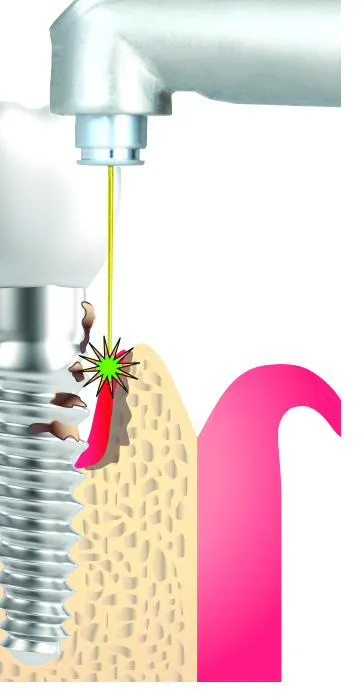
Inflammation can spread from the gum line to the bone
A titanium implant can't get a cavity. The gum sealed around it and the bone it sits in are living tissue, though, and they react to plaque bacteria much as they do around natural teeth.
It happens in two stages. First the gum alone becomes inflamed; dentists call this peri-implant mucositis. Left alone, the inflammation can travel deeper and start breaking down the bone that anchors the implant. That second stage is peri-implantitis, and bone lost this way does not simply grow back.
The tricky part is that it rarely hurts. Look out for gum that bleeds when you brush or floss, redness or puffiness, pus or a bad taste, gum shrinking back to show the metal, or a crown that suddenly feels different when you bite. Any one of these deserves a proper look, even if it seems minor.
At a review the dentist looks at the gum around each implant, checks for bleeding, gently measures the gum pocket and may recommend an X-ray to see the bone. Where plaque tends to hide depends on what the implant is holding.
Bleeding, swelling or a bad taste can come from other problems too. Only an examination can tell what is really happening.
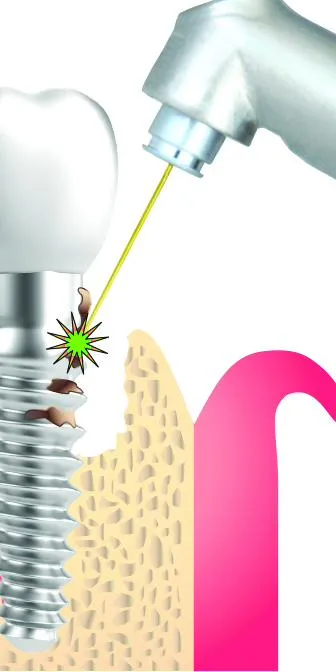
Deeper disease affects the bone that anchors the implant
For gum-only inflammation, care is usually a thorough professional clean around the implant, a refreshed home-cleaning routine and a follow-up visit to confirm the bleeding has settled.
Once bone is involved, the implant surface may need deeper cleaning, sometimes with antiseptic rinses or antibiotics. More advanced cases can need minor gum surgery to reach and clean the implant, occasionally with a bone graft. If too much support has already been lost, taking the implant out may be one of the options discussed.
Laser dentistry is one of the tools used to clean around implants. Our peri-implantitis laser page explains where it can fit in.
Before anything goes ahead, your dentist explains what they found, the choices that suit it and the risks of each one.
Most peri-implantitis begins with plaque, so everyday cleaning does much of the protective work. Smoking, diabetes that isn't well controlled and a past history of gum disease all raise the risk, so mention any of them at your review.
Angle a soft brush towards the gum around the implant, then clean between teeth once a day with the interdental brush or floss your dentist suggests.
Regular professional cleans and checks catch small changes early. Your dentist will suggest how often based on your gums and the kind of restoration you have.
Bleeding, swelling, a bad taste or a crown that feels loose are reasons to call rather than wait for your next check-up.
Your dentist can tailor these tips to your implant, your restoration and your gums.
It depends on what the check finds. A professional clean for early gum inflammation is a much smaller job than surgical treatment, so ask for a written estimate once your implant has been examined.
Point Cook patients can claim eligible health fund extras on the spot with HICAPS, or spread costs with Afterpay, Zip Pay, Humm or SuperCare. Each provider sets its own fees, eligibility and approval rules.
Want a feel for repayments on a sample amount? Try the repayment estimator →
The estimator shows an example only. It is not a quote, a lending offer or a credit decision.
We accept





A visit to our Point Cook clinic can show whether it's simple gum irritation, peri-implantitis or something else, and what the next step should be.
Caring for fixed full-arch teeth? Our All-on-X implant dentures page covers how they are cleaned and reviewed. If a graft is part of your treatment, see bone grafting, or compare every option on the dental implants overview.