This clinic
01Point Cook
Address220 Point Cook Road, Point Cook VIC 3030
Phone(03) 8338 1515
HoursMon–Sat 9:00 am–5:00 pm

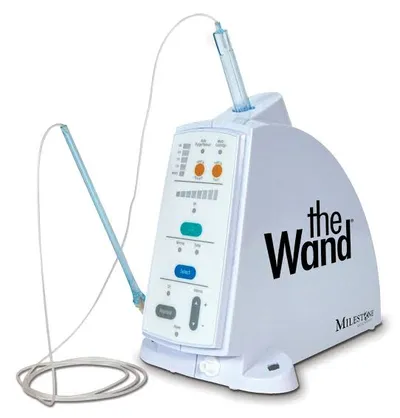
Computer-controlled anaesthetic is a way of giving local anaesthetic where a computer, not a hand-pushed syringe, releases it slowly and evenly, usually through a light, pen-shaped handpiece. A very fine needle is still used. If needles worry you, tell Magical Smiles Point Cook when you book on (03) 8338 1515 and we'll explain the numbing options for your treatment.
A fear of needles doesn't always look dramatic. Sometimes it's just white knuckles on the armrest. Do any of these ring a bell?

With a regular syringe, the dentist's hand controls how fast and how firmly the anaesthetic goes in. A computer-controlled system hands that job to a computer, which keeps the flow slow and steady from start to finish. The anaesthetic usually travels through a slim handpiece held like a pen, so it looks nothing like a syringe.
To be completely clear: a fine needle is still part of it. What changes is how the anaesthetic is delivered, how even the pressure is and how the instrument looks. Many nervous patients and children find that difference helps.
If injections are what worry you, you're in good company. Victoria's Better Health Channel lists needles, drills and the dental setting in general among the things that can trigger dental anxiety. Putting off care is common too, whatever the reason: in the ABS Patient Experience Survey 2024–25, reported by the Australian Institute of Health and Welfare, 25% of people aged 15 and over who needed to see a dental professional delayed or didn't go at least once in the previous 12 months.
There is still a needle and an injection. How it feels differs between people, and your dentist will explain which numbing method suits your treatment and health. As a guide to the numb feeling, healthdirect's tooth extraction page (last reviewed February 2025) says the anaesthetic wears off after 1 to 2 hours.
It isn't needed for every appointment. Here's when to bring it up.
Comfort with numbing is part of every conversation in our general dentistry care at Point Cook.
If an appointment needs local anaesthetic, it's worth telling us how you feel about injections. Some common examples:
Not every appointment needs numbing, and computer-controlled delivery isn't used for every type of anaesthetic. We'll explain what suits your treatment at your visit.
Tell us about the nerves
If needles are the hard part for you or your child, let us know. It changes how we plan the whole visit, not just the injection.
We explain your options
Your dentist explains which numbing method suits your treatment and what you'll notice.
Numbing at a calm pace
The anaesthetic is given gradually while we tell you what's happening as we go.
On to your treatment
When you're numb and ready, we carry on with your filling, extraction or whatever you came in for.

If injections are what worries you, we plan the appointment with that in mind and talk it through properly.
We won't hide the fact that a needle is involved. We'll explain exactly what's different so you can decide for yourself.
Whether it's a child's first filling or an adult who has always disliked injections, we plan the numbing around the person in the chair.
Tell us when you book, or phone first. We're happy to talk about numbing and other comfort options before you commit to anything.
Book a consultation (03) 8338 1515This is general information. Computer-controlled anaesthetic still involves a needle and an injection. Comfort and suitability vary, and we'll confirm what's appropriate for you and your treatment before we begin.




 Health funds
For yourself or your child, tell us how you feel about needles and we'll explain the numbing options for your appointment.