✦ Now welcoming new patients  ·  Toothache? Call early for the first available time  ·  HICAPS, Afterpay, SuperCare & most health fundsPoint Cook · (03) 8338 1515
Point Cook · Dentures

Dentures in Point Cook: full, partial and immediate.

A denture is a removable set of replacement teeth, made from moulds of your own mouth. At Magical Smiles Point Cook we make full dentures, partial dentures and immediate dentures (fitted the day teeth are removed), and we walk you through each option before you choose. Visit us at 220 Point Cook Road, Monday to Saturday, or call (03) 8338 1515.

Sound familiar?

The little workarounds you've stopped noticing.

Losing teeth tends to happen gradually, and so do the habits that come with it. You adapt, then adapt again, until the adjustments feel normal. If any of these sound like you, it may be time for a relaxed chat about replacement teeth.

  • You chew on one side only, and steak, crusty bread or raw carrots have slipped off the shopping list.
  • You smile with your lips closed in family photos out of habit.
  • Some words come out slightly differently, especially the ones with an "s" or "f".
  • Food gets caught in the spaces, or your bite no longer meets evenly.
  • Your teeth are on your mind far more than you'd like them to be.
Older woman smiling and holding a yellow apple
Back to the foods you enjoy
In simple terms

How a denture works.

A denture is a custom-made appliance carrying artificial teeth on a gum-coloured base. It sits over your gums (and, for a partial, clips around the teeth you still have) so you can bite, chew and speak with more confidence. You take it out to clean it and to give your gums a rest overnight.

There are several designs. Some replace a few teeth, some replace every tooth on the top or bottom, and some are ready the same day teeth are taken out. The base can be acrylic or a thin metal framework, and each feels a little different. The right choice depends on your gums, the teeth you have left and what matters most to you, which is exactly what we sort out together at your first appointment. Weighing up dentures against implants? Our sister clinic's article on choosing between dental implants and dentures sets out the differences.

If you're weighing this up, you're far from alone. The Australian Institute of Health and Welfare (AIHW) reports that in the 2017–18 national adult oral health study, 1 in 10 adults aged 15 and over (10%) had fewer than 21 natural teeth, and 1 in 25 (4.0%) had lost all of them. Losing every tooth became more common with age, rising from 1.1% of people aged 35–54 to 21% of those aged 75 and over.


Your choices

Three main types of denture.

Here's a side-by-side overview. There's no need to know which one you want before you come in; working that out is what the first visit is for.

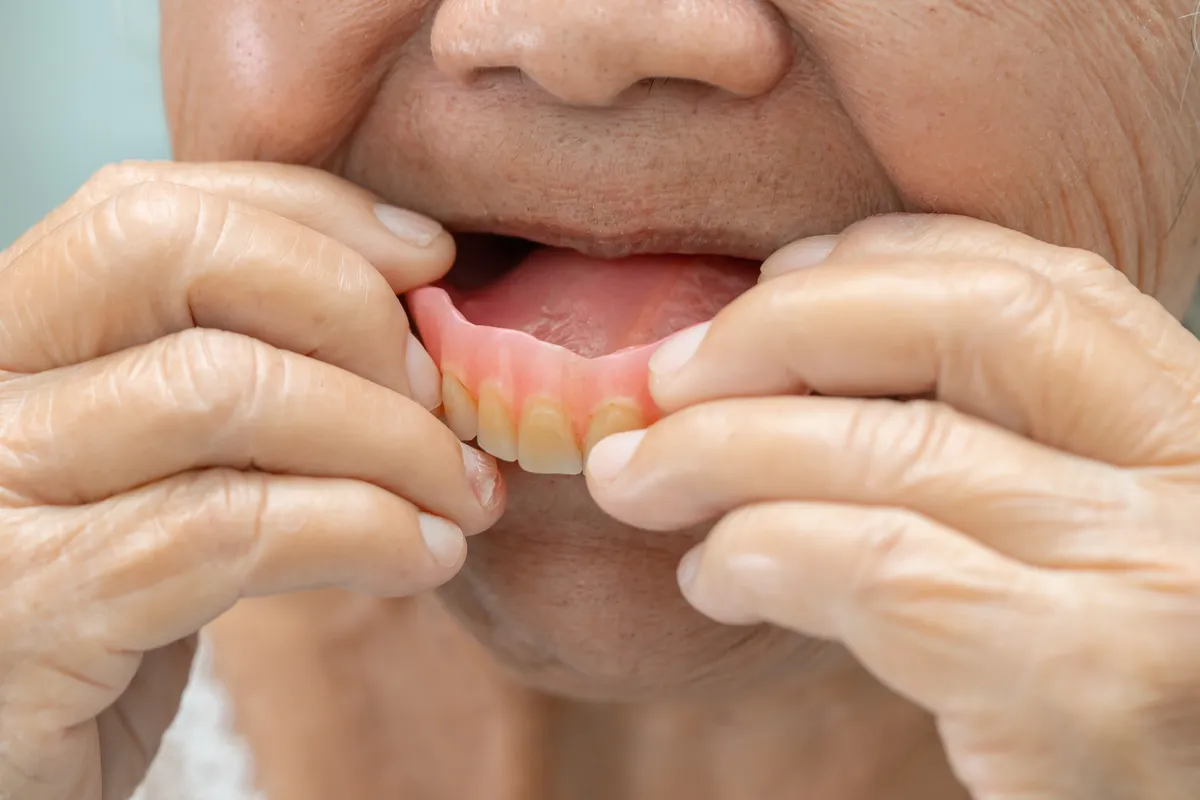
01 / Ready on the day Older patient holding an immediate denture before it is fitted

Immediate Dentures

These are made in advance from moulds taken before your extractions, then placed straight after the teeth come out, so you don't go home with a gap.

Your gums change shape as they heal over the following months. Because of that, an immediate denture is treated as a first stage and is refitted (relined) once the healing has settled.

Why choose one? Victoria's Better Health Channel explains that denture measurements usually start about two to three months after teeth are removed, once the gum and bone have settled. An immediate denture means you don't have to spend those months without teeth.

Placed after extractions No waiting with gaps Refit once healed
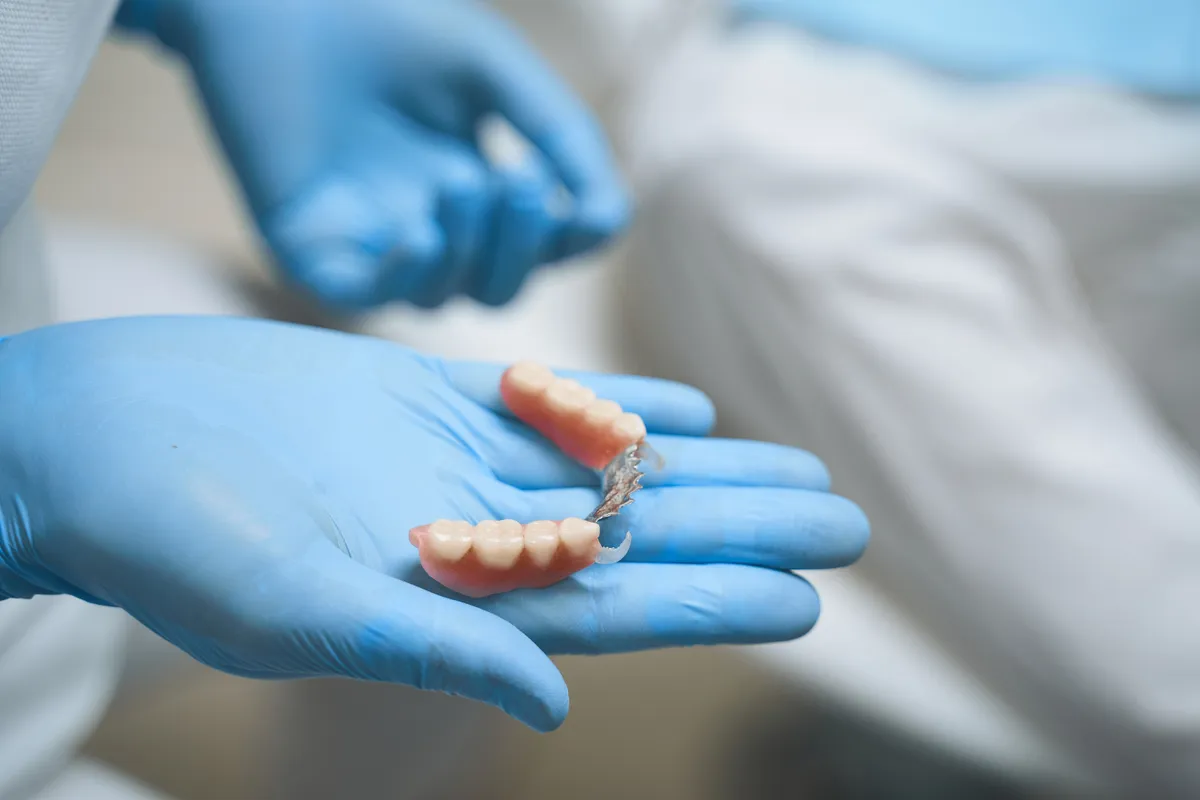
02 / Keeping your own teeth Dentist wearing blue gloves holding a partial denture

Partial Dentures

A partial replaces the missing teeth and keeps your healthy natural teeth in place. Small clasps hold it steady against the neighbouring teeth.

An acrylic partial is simple to make and can often have teeth added later if you lose more. A cobalt-chrome partial uses a thin metal framework, which usually feels less bulky and leaves more of the palate uncovered.

Acrylic option Cobalt-chrome option Healthy teeth stay
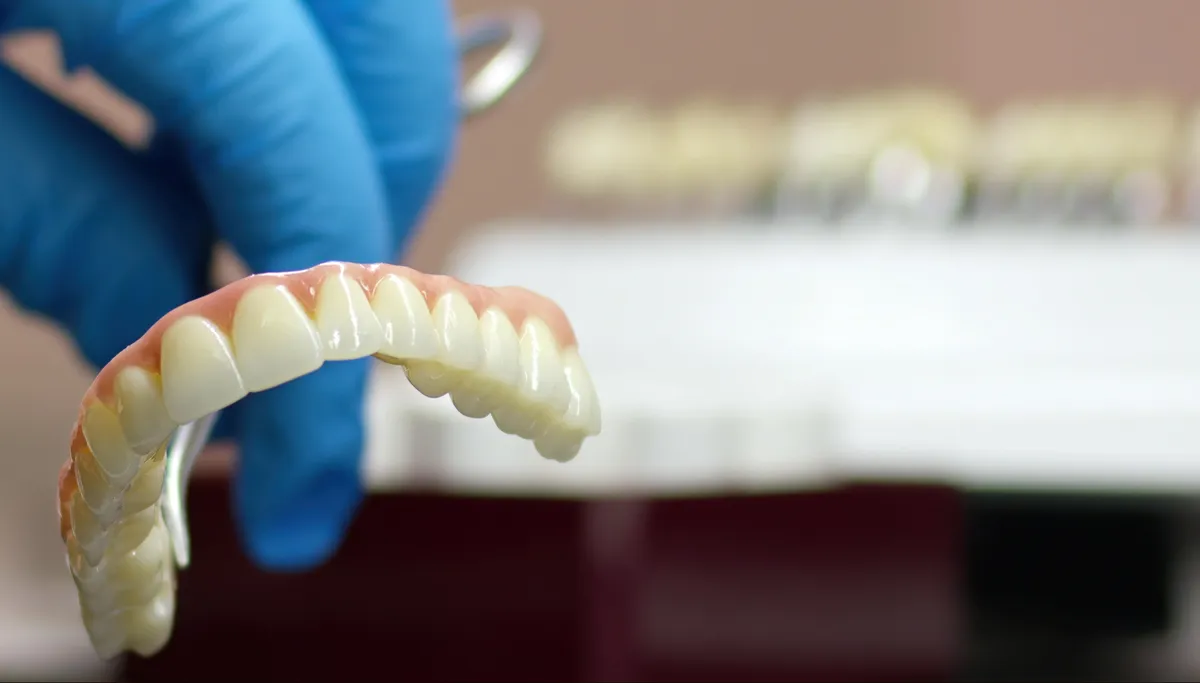
03 / Top or bottom arch Full denture being checked on equipment in a dental laboratory

Full Dentures

A full denture replaces every tooth in the upper or lower jaw. It rests on the gum ridge and is shaped to support your lips and cheeks naturally.

Most are acrylic and stay in place with suction and the fit of the base. A metal-plated version can be made thinner and lets you sense hot and cold food more easily. We'll explain which is likely to suit your mouth.

Acrylic full denture Metal-plated full denture Upper or lower

Immediate dentures involve having teeth removed. Any surgical or invasive procedure carries risks. Before proceeding, you should seek a second opinion from an appropriately qualified health practitioner.

Your appointments

From first chat to a comfortable fit.

Most dentures take around five appointments at our Point Cook clinic. Here's what each one involves.

01

Consultation

We examine your gums and remaining teeth, listen to what's bothering you and explain the options and likely costs. You don't have to decide anything on the day.

Dentures are part of our general dentistry care, and healthy gums still matter. If your natural teeth need attention first, we'll explain the cleaning they need, from gentler methods such as air polishing to deep cleaning.

02

Moulds of your mouth

Impressions of your gums and teeth give the lab an accurate model, so the denture is built for you and not from a standard template.

03

Bite record and wax try-in

We measure how your jaws close together, and you help choose the shape and shade of the teeth. A wax version lets you check the look and fit before the final denture is made.

04

Fit day

Your new denture is placed, your bite is checked and any tight spots are smoothed. We'll also show you how to put it in, take it out and clean it.

05

Follow-up adjustments

After a week or two of everyday wear, we ease any sore areas and fine-tune the fit. Needing a couple of these visits is normal; it takes time for your mouth to adjust.

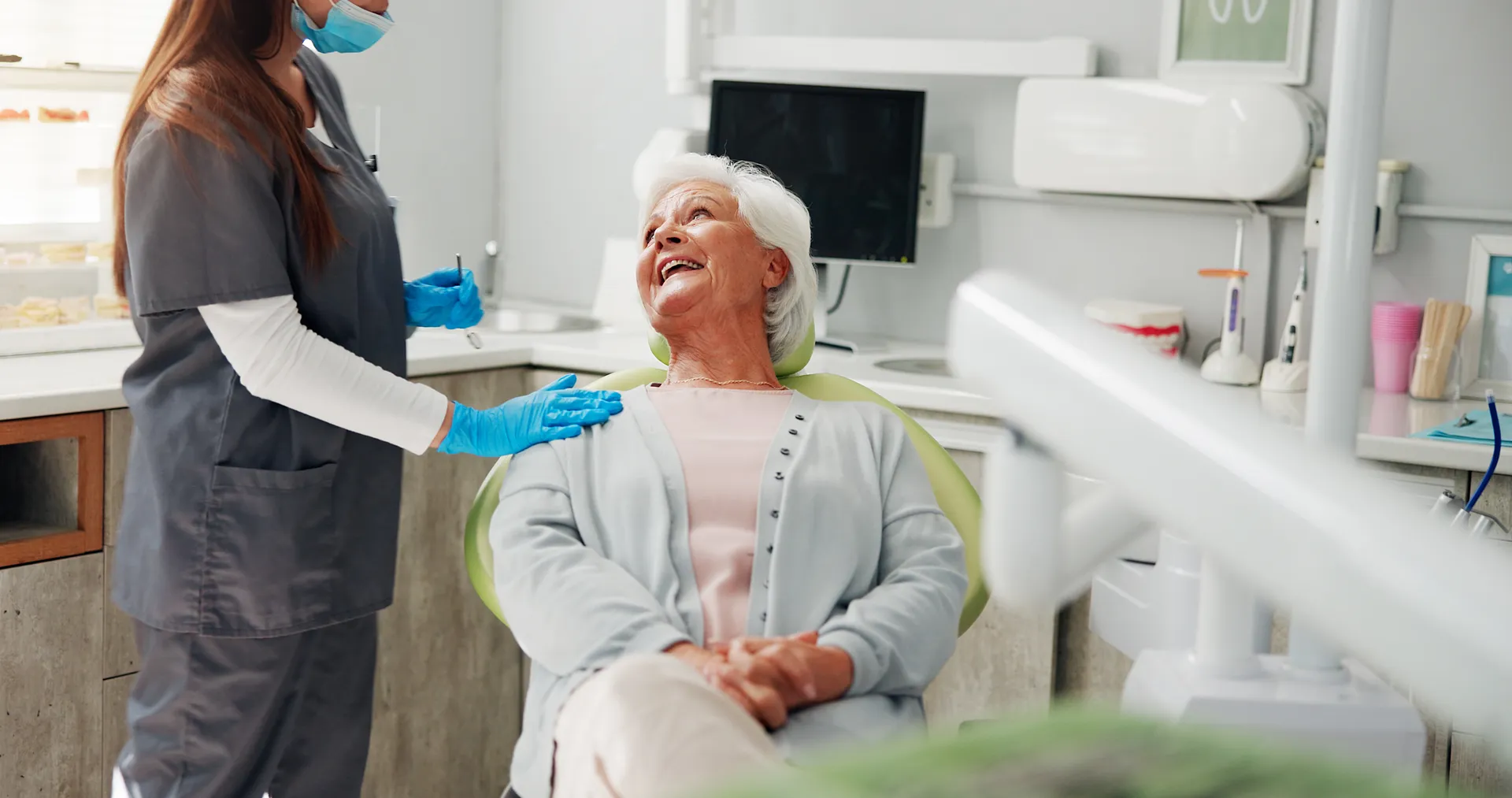
Older woman laughing with her dentist during an appointment
Longer term

Why dentures need a little upkeep.

Your mouth keeps changing after teeth are lost, so every denture needs occasional attention. Here's what to expect over the years.

01

Loosening is normal

Once teeth are gone, the bone and gum underneath gradually shrink. A denture that fitted snugly can start to rock or rub. It's an expected change, not a sign you've done something wrong.

02

What relining involves

Relining adds fresh material to the underside so it matches the current shape of your gums. You keep the same teeth. Some relines are done in the chair; others go to the lab for about a day.

03

The first refit after extractions

Gums keep healing for months after teeth are removed, so immediate dentures are usually relined once that settles, often three to six months later.

04

Regular check-ups

Routine visits let us spot a loosening fit early, ease pressure points and plan the next reline. Expect one every few years as part of normal denture care.

How we work

Clear choices, careful fitting.

No pressure to decide

We explain every suitable option, give you a written estimate and leave you time to think it over at home.

Checked at every stage

From moulds to try-in to fitting, we keep asking how it feels, so small rubs are fixed early instead of becoming daily annoyances.

Support after the fit

Adjustments, reviews and relines are planned with you, so your Point Cook dental team is there as your mouth changes.

Common questions

Dentures in Point Cook: answered.

Yes. Magical Smiles Point Cook makes immediate dentures ahead of your extractions and fits them on the same day, so you leave with teeth in place. Because gums shrink while they heal, the denture is relined a few months later.
Acrylic dentures are straightforward to make, adjust and add to. Metal (cobalt-chrome) dentures have a thin cast frame that many people find less bulky and more stable, and they cover less of the palate. Your dentist will recommend what suits your mouth and budget.
Usually about five: a consultation, moulds, a bite record and wax try-in, the fitting, and at least one follow-up adjustment. Everything happens at our clinic at 220 Point Cook Road, and we book the visits around your week.
The gum and bone under a denture slowly change shape, so over time the fit can loosen. A reline reshapes the underside to match your gums again, usually without replacing the whole denture. Book a check if it rocks, rubs or feels different.
The price depends on the type and material, so we give you a written estimate before any work begins. You can claim health fund rebates on the spot through HICAPS, and payment options including Afterpay, Zip Pay, Humm and the National Dental Plan are available, subject to eligibility and terms.

Unsure which denture you need?

That's what the consultation is for. If you'd like to ask something before booking, call the clinic and we'll happily talk it through.

Book a consultation (03) 8338 1515

Magical Smiles Point Cook

Address220 Point Cook Road, Point Cook VIC 3030
HoursMon – Sat · 9:00 AM – 5:00 PM · Sun closed
Get directions

Any surgical or invasive procedure carries risks. Before proceeding, you should seek a second opinion from an appropriately qualified health practitioner. How quickly people adjust to a denture varies.

Next step

Talk to us about dentures in Point Cook.

One consultation gives you a clear picture of your choices, the timeline and the cost. Book online or phone the clinic and we'll find a time that works.

Point Cook · 220 Point Cook Road VIC 3030 · info@magicalsmilespointcook.com.au
Any surgical or invasive procedure carries risks. Before proceeding, you should seek a second opinion from an appropriately qualified health practitioner.

Our locations