✦ Now welcoming new patients  ·  Toothache? Call early for the first available time  ·  HICAPS, Afterpay, SuperCare & most health fundsPoint Cook · (03) 8338 1515
Point Cook · Cleaning methods

Air polishing for teeth, explained for Point Cook patients.

Air polishing is a cleaning technique that sprays warm water, air and a soft powder over the teeth instead of relying on a metal scraper alone. It can lift plaque, everyday stains and the sticky film that collects around braces, aligner attachments and implants. At Magical Smiles Point Cook, 220 Point Cook Road, every clean starts with a look at your teeth and gums, and your dentist explains which cleaning method suits you before starting. Book online or ring (03) 8338 1515, Monday to Saturday.

Sound like you?

When the clean is the part you dread.

Plenty of people put off their hygiene visit for reasons that have nothing to do with how their teeth look. If one of these rings true, ask about air polishing at your next check-up.
  • The scraping sound gets to you during a scale and clean, even though the rest of the visit is fine.
  • Your gums bleed or sting easily, so a cleaning appointment leaves you tender for a day or two.
  • You're wearing braces or aligners, and food and plaque keep collecting around the hardware.
  • Morning coffee or evening tea leaves its mark, and you'd like those surface stains lifted.
  • You have an implant or bridge and want it cleaned with care rather than force.
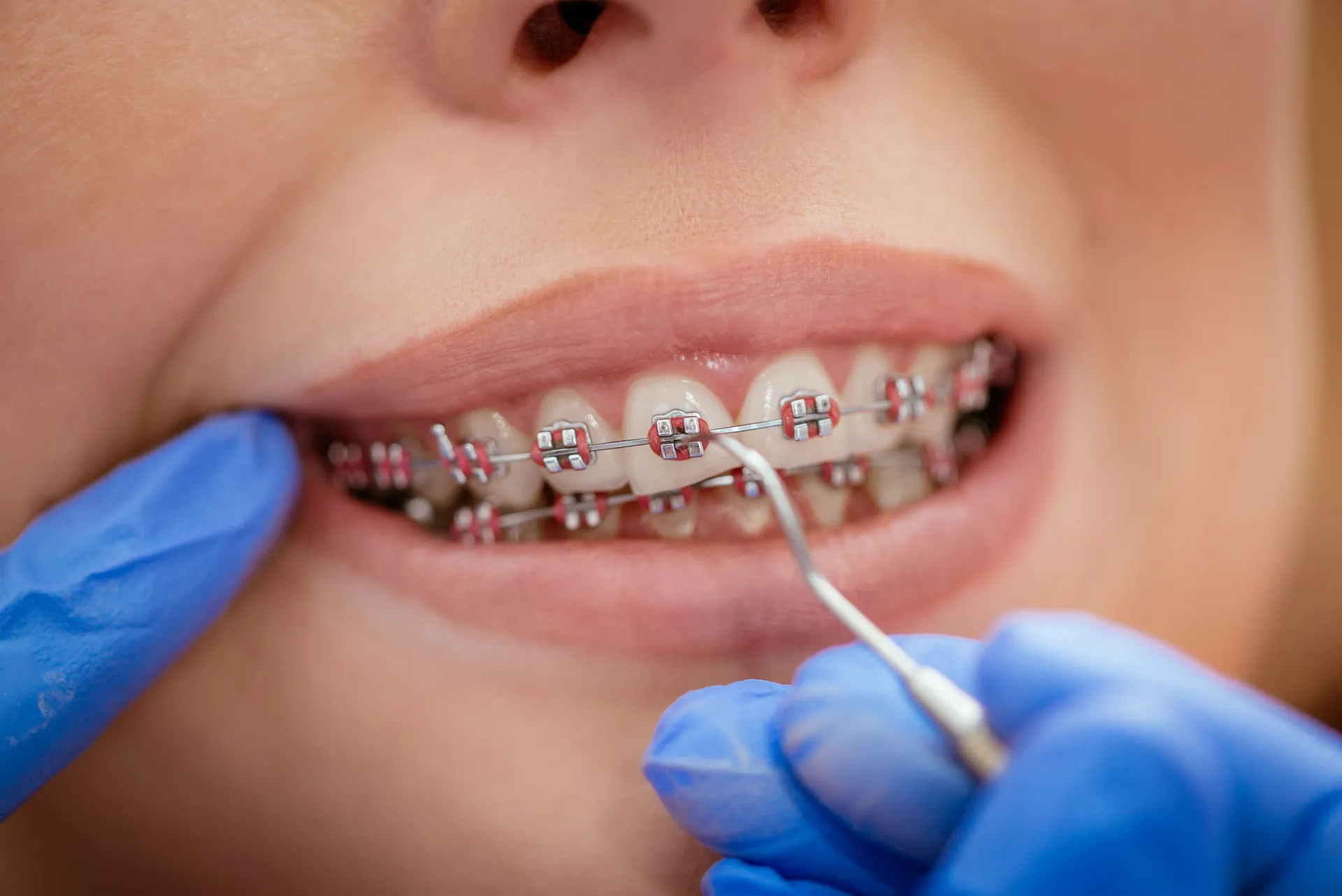
Teeth with orthodontic brackets being cleaned during a hygiene visit
Brackets and attachments trap plaque in awkward corners
In simple terms

So what is air polishing?

Think of it as a precise rinse with a little extra cleaning power. An air-polishing handpiece mixes warm water, compressed air and an ultra-fine powder into a steady spray that washes plaque and staining off each tooth. Because it's a spray rather than a rigid tip, it reaches places that are hard to scrape: under a bridge, between crowded teeth, around orthodontic brackets and along the collar of an implant.

There's no single setting. Softer powders are generally used on gums and implant surfaces, and slightly firmer ones on set-in marks on enamel. Which cleaning method your mouth needs is something your dentist decides after checking your teeth and gums.

If your gums bleed when you brush, you're in good company. The Australian Institute of Health and Welfare (AIHW) reports that around 3 in 10 adults aged 15 and over (29%) had gingivitis, or early-stage gum disease, in the 2017–18 national adult oral health study. It's usually caused by plaque building up along the gumline, which is exactly what a thorough clean and good home care set out to remove.
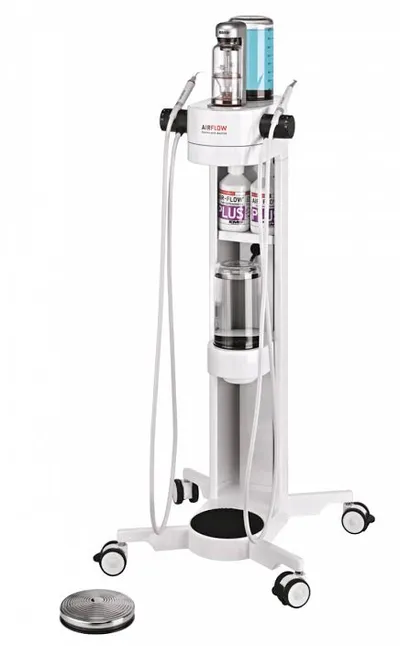
Example of an air-polishing hygiene unit with its handpiece
Air polishers blend warm water, air and powder in one handpiece
How it works

Why it can feel easier on sensitive teeth.

Water, air & fine powder
  • Less scraping on enamel. The spray loosens plaque and marks rather than chipping at them, which is why people with sensitive teeth often ask about it.
  • Reaches the tight spots. Brackets, aligner buttons, bridges and implant edges are exactly where a spray can travel and a hand tool struggles.
  • Adjusted area by area. A light setting near gums and implants, a stronger one where staining has settled in.

Air polishing cleans the surface; it won't change the natural colour of your teeth. Hardened tartar (calculus) still needs traditional scaling, which is why the two are often combined: scaling first, then air polishing to finish.

Woman holding a toothbrush and pointing to her smile while talking about home care
Honest answer first

Could air polishing be right for you?

It helps a lot of people, but it isn't the answer for every mouth. Here's an honest guide.

A good one to ask about if…

  • Traditional scaling leaves your teeth or gums feeling sore afterwards.
  • You're in the middle of orthodontic treatment with braces or clear aligners.
  • You have an implant, crown or bridge that needs careful cleaning around its edges.
  • Tea, coffee or red wine have left marks you'd like cleaned away.

You may need more than air polishing if…

  • There's hardened tartar under the gums. That comes off with scaling first, and air polishing can follow.
  • Your goal is a lighter shade. That's a whitening question, and we're glad to talk it through.
  • It's been several years since your last visit. We'll check your gum health before recommending a cleaning plan.
Your visit

What happens during an air-polishing clean.

01

Teeth and gums are checked

A look at your gum health and any tartar shows whether air polishing on its own is enough or whether scaling should come first.

If pockets have formed below the gumline, our deep cleaning page explains what a more thorough clean involves.

02

Settings chosen for your mouth

Powder type and spray strength are usually set area by area: softer near gums and implants, firmer on stubborn stains.

03

The clean

The spray is guided over every surface, between teeth and around any brackets, attachments or implants, while suction clears the water.

04

Finish and plan ahead

You rinse, the result is checked, and a return visit is suggested. For many people that's every six months, depending on gum health. In the AIHW's 2017–18 national adult oral health study, adults who usually visited the dentist for a problem were nearly twice as likely to have untreated decay as those who usually went for a check-up (44% compared with 24%).

If air polishing is part of your clean, we'll confirm the cost before we start.
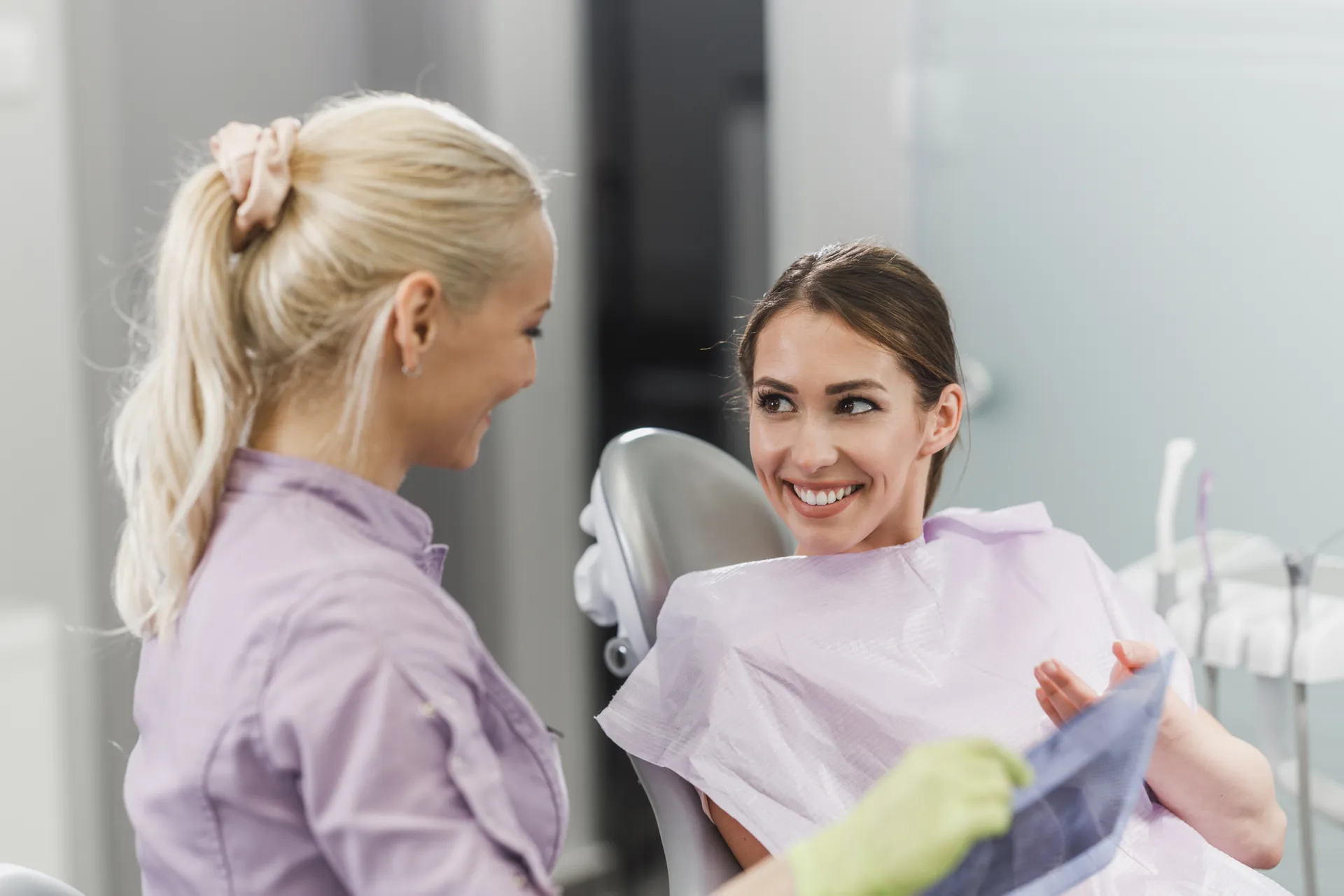
Patient smiling while chatting with her dentist in the treatment room
Our approach

Cleaning care that's planned around you.

Tailored, not routine

Your clean is planned around your teeth and gums on the day, instead of repeating the same routine for everyone who walks in.

Careful with braces & implants

Orthodontic hardware and implant edges need careful cleaning, so we explain which method suits them rather than adding extras automatically.

Clear about what it can't do

If hardened tartar needs scaling, we'll tell you so and explain how the two methods work together.

Common questions

Air polishing: your questions answered.

Air polishing uses a fine spray of warm water, air and a soft powder to wash plaque, biofilm and surface stains off teeth. It's useful between teeth and around braces, aligner attachments, bridges and implants, where hand instruments are harder to angle.
Usually it works together with one. Air polishing is designed for soft plaque and staining, while hardened tartar still needs scaling. Your dentist will explain which method, or mix of methods, your clean needs before starting.
Yes, you can ask. Cleaning methods and equipment differ between clinics, so when you book a check-up and clean at Magical Smiles Point Cook, 220 Point Cook Road, ask which methods we use and whether air polishing suits your teeth and gums. We're open Monday to Saturday, 9am to 5pm, on (03) 8338 1515.
It removes surface staining, which can make teeth look cleaner and brighter, but it doesn't change their natural shade. If you'd like a lighter colour, professional teeth whitening is a separate conversation.
Often, yes. It's one of the main reasons people ask about it, because the spray moves around brackets, attachments and implant surfaces without heavy scraping. Your dentist will confirm the right cleaning method for your situation at your appointment.
The fee depends on what your clean involves, and we'll give you the cost before we begin. You can claim health fund rebates on the spot with HICAPS, and payment options such as Afterpay, Zip Pay and Humm are available, subject to eligibility and provider terms.

Wondering which clean suits you?

Mention it when you book your next check-up, or give us a call. Your dentist checks your teeth and gums first, then explains which cleaning method fits.

Book a consultation (03) 8338 1515

Magical Smiles Point Cook

Address220 Point Cook Road, Point Cook VIC 3030
HoursMon – Sat · 9:00 AM – 5:00 PM · Sun closed
Get directions

This page gives general information only. Which cleaning method suits you depends on your teeth and gums, so your dentist checks your mouth and talks through your options before any treatment.


Ready when you are

Book a check-up and clean in Point Cook.

Sensitive teeth, braces, an implant, or you'd simply like a fresher feeling: tell us what's going on and we'll suggest the right way to clean.

Point Cook · 220 Point Cook Road VIC 3030 · info@magicalsmilespointcook.com.au
General information only; it doesn't replace personal advice from your dentist. Suitability and results differ from person to person.

Our locations